


 TECH
TECH

 Images by Rodger Lee
hile short wheelbase, single-cab classic trucks are certainly cool, being able to haul your family and friends in a crew cab pickup is cool too, just on a larger scale.
Early on crew cab trucks were built by a number of aftermarket suppliers for the military and various industries, like railroads, oil companies, and logging operations. It wasn’t until 1957 that crew cabs were offered to the general public and somewhat surprisingly that year the first U.S. manufacturer to bring them to the consumer market was International Harvester with the Travelette. Dodge introduced its version of the crew cab in 1963, Ford followed in 1965, and GMC and Chevrolet in 1973.
When General Motors introduced the Chevrolet and GMC Crew Cab trucks they were available in 3/4- or 1-ton load capacities as a cab and chassis or a pickup with an 8-foot bed. Of course the big news was the introduction of the Chevrolet “Big Dooley” 1-ton Crew Cab pickup with dual rear wheels. GMC also offered a 1-ton “dualie,” both could be equipped with a 454-inch big-block and were immediate hits with anyone who towed a trailer or boat.
As well as a variety of engine and transmission options, Crew Cabs were available in a number of trim levels. The base trim was just that, a basic interior with vinyl seats and no frills. At the other end of the interior spectrum were a deluxe instrumentation option along with upgraded carpet, upholstery, and even bucket seats.
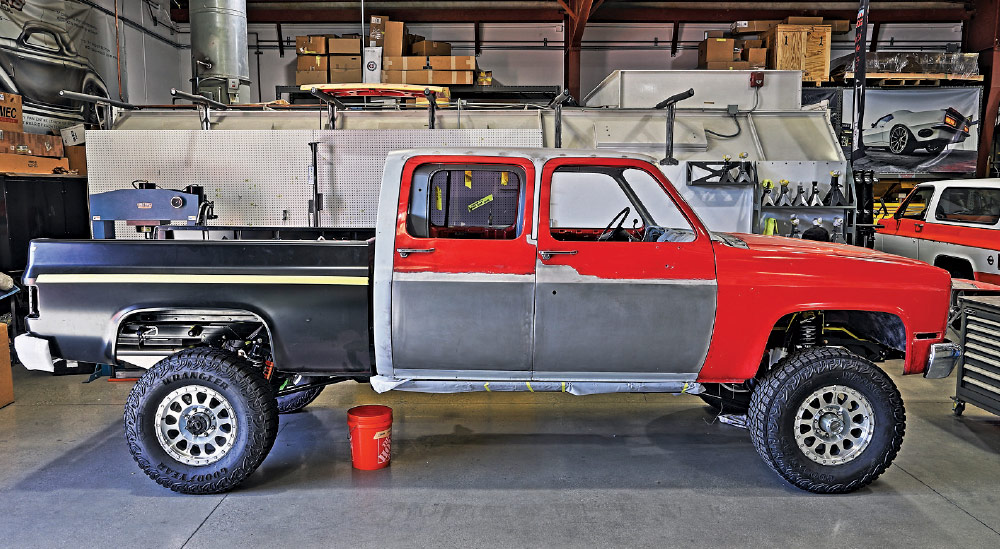
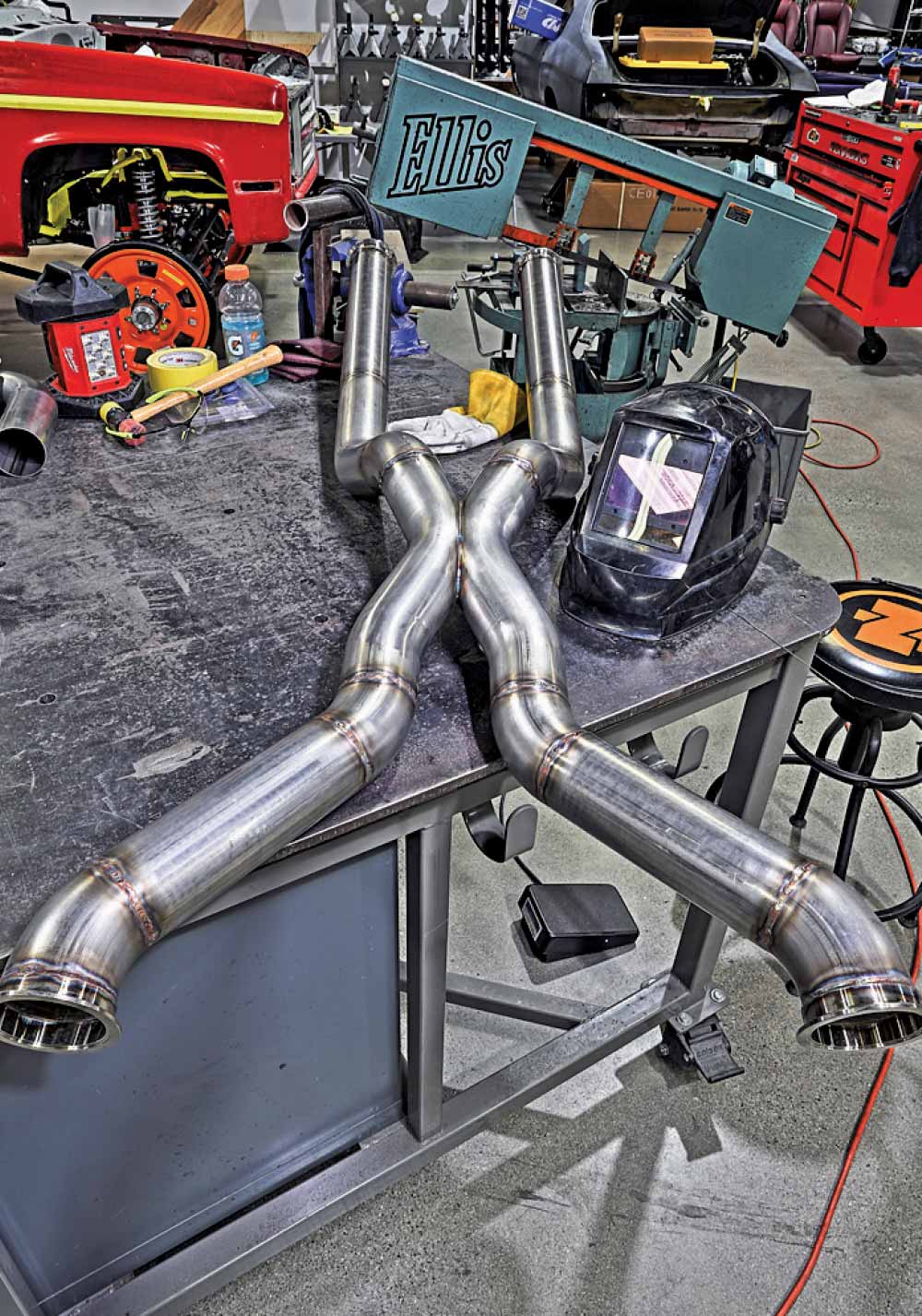
While it seems new crew cab trucks have become more common in the last decade or so, the interest in building a vintage version is growing as well. Someone who knows a lot about doing that is Rodger Lee of Ironworks Speed & Kustom. Known for their fabrication skills and high-end builds, Lee and his crew have also applied their expertise to several crew cab trucks, the example under construction shown here is a 1987 Chevrolet.
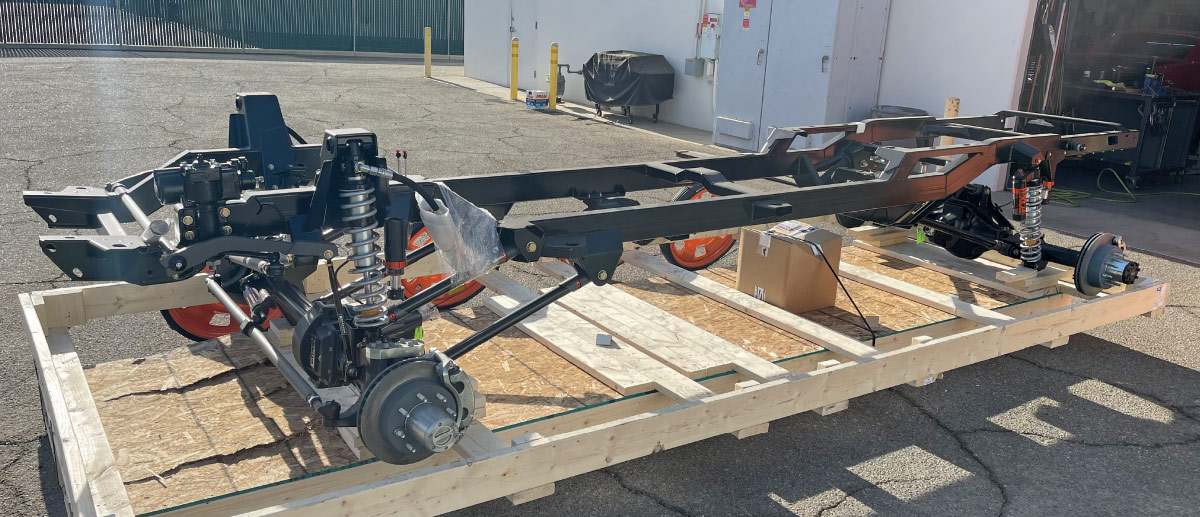
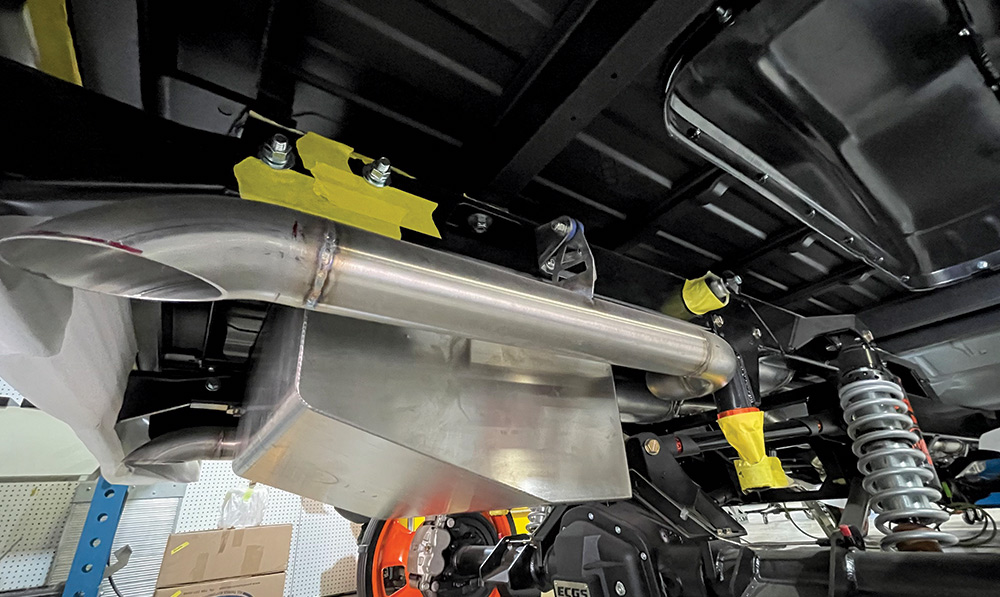
Starting from the ground up, the original Chevrolet underpinnings are scrapped in favor of an all-new RS4 chassis from Roadster Shop. Based on their proven laser-cut rails, the Currie Dana 44 front and Dana 60 rear differentials are secured to the chassis with triangulated four-links designed to optimize antidive, antisquat, and suspension articulation for far better on- and off-road performance than the stock or modified original suspension could provide.
Roadster Shop offers a variety of engine mounting options for small- and big-block Chevrolets, as well as LS, LT1, LT4, and LT5 engines. In this case, Ironworks went for the gusto and slipped in a GM 6.6 (400.55 ci) L8T from Don Hardy. These naturally aspirated V-8s are based on a cast-iron block with aluminum heads and are good for 401 hp with 464 lb-ft of torque right out of the crate.
Backing up the L8T is a GM 10R140 automatic transmission. In GM-speak, the 10 stands for the number of gears, the R is for rear-wheel drive, and the 14 is for the torque capacity (1,050-newton meters/1,032 lb-ft). These computer-controlled transmissions are unique in that they have three overdrive ratios in gears Eight, Nine, and Ten, 0.85:1, 0.687:1, and 0.632:1 respectively.
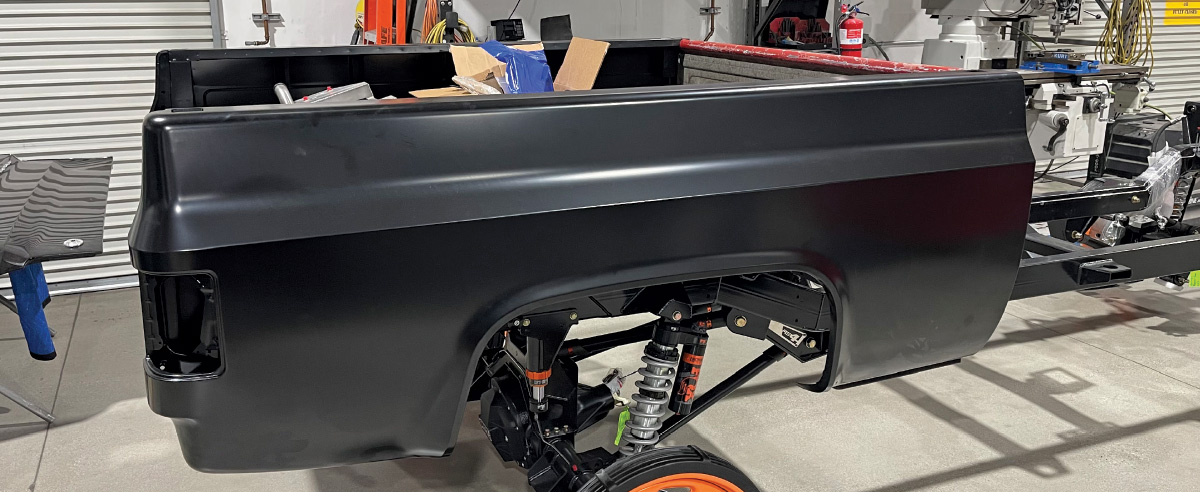
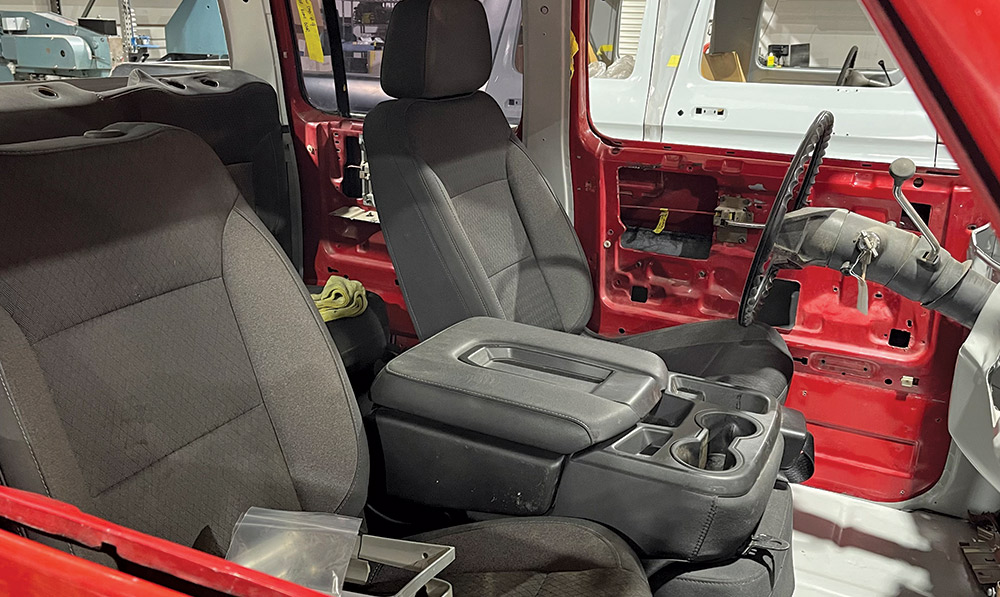
Along with making the running gear modifications, Ironworks paid particular attention to perfecting the fit and finish of the sheetmetal; no small task for a truck that wasn’t perfect to begin with and had its share of use and abuse over the years. After making repairs to rusted areas of the cab the door gaps were made even and the body lines were massaged to be straight as a string from front to back—and on a Crew Cab Chevrolet it’s a long way from the front to the back. Inside custom seating will be added along with new instrumentation, climate control, and sound systems.
As food for thought, here’s a look at Ironworks Speed & Kustom’s take on putting together a classic plus-size pickup; it’s cool on a large scale.








 SOURCE