

 Tech
Tech

 IMAGES BY THE AUTHOR
y first car in high school was a 1993 S-10 with a weak 4.3L V-6 and throttle-body injection (TBI). It taught me humility in my adolescence. That lingering feeling of being the slowest in the parking lot may have created a prejudice for TBI … and maybe V-6s, too. Later, I invested in a 1967 Impala with one of the first Holley self-learning EFIs, the “Avenger.” It didn’t help the case for TBI, as it occasionally fumbled the idle and took lots of rpm to crank. I went back to the carburetor.
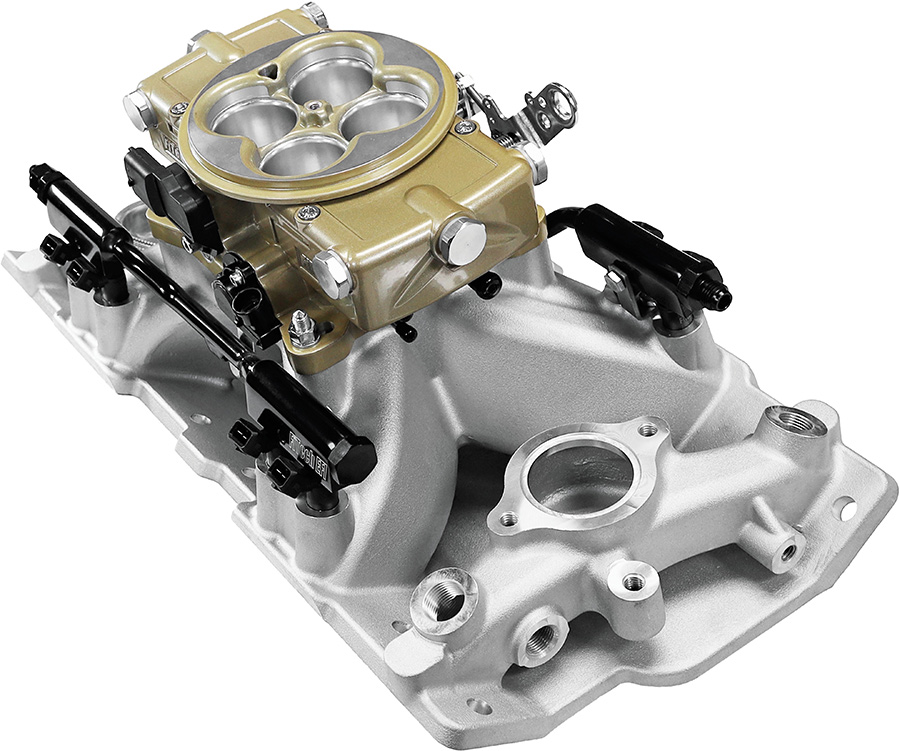
But modern, aftermarket TBIs are far from where they once were. Originally, OEM TBIs featured low pressure injectors that hang right above the throttle blades, point downward, and spray right into the top of the intake.
Now, most aftermarket units include 4 or 8 high-pressure injectors and a machined ring that helps evenly distribute fuel across the bore. More sensors and smarter, faster computers.
So, are TBI kits the way to go? What should I know when shopping for fuel injection?
It was introduced as the Cross Fire on the 1982 Corvette. TBI had such a short stay as a performance headline on vehicles like the Corvette, replaced by the Tuned Port in 1984, even while it lived much longer on trucks and dependable daily driver applications. On a stocker, it made sense. In the performance world, port injection moved the conversation forward quickly.
But that history also created a bias that still hangs around today. As Holley’s Harrison J. Alford put it, modern systems only share the same general concept, “except a lot more refined.”
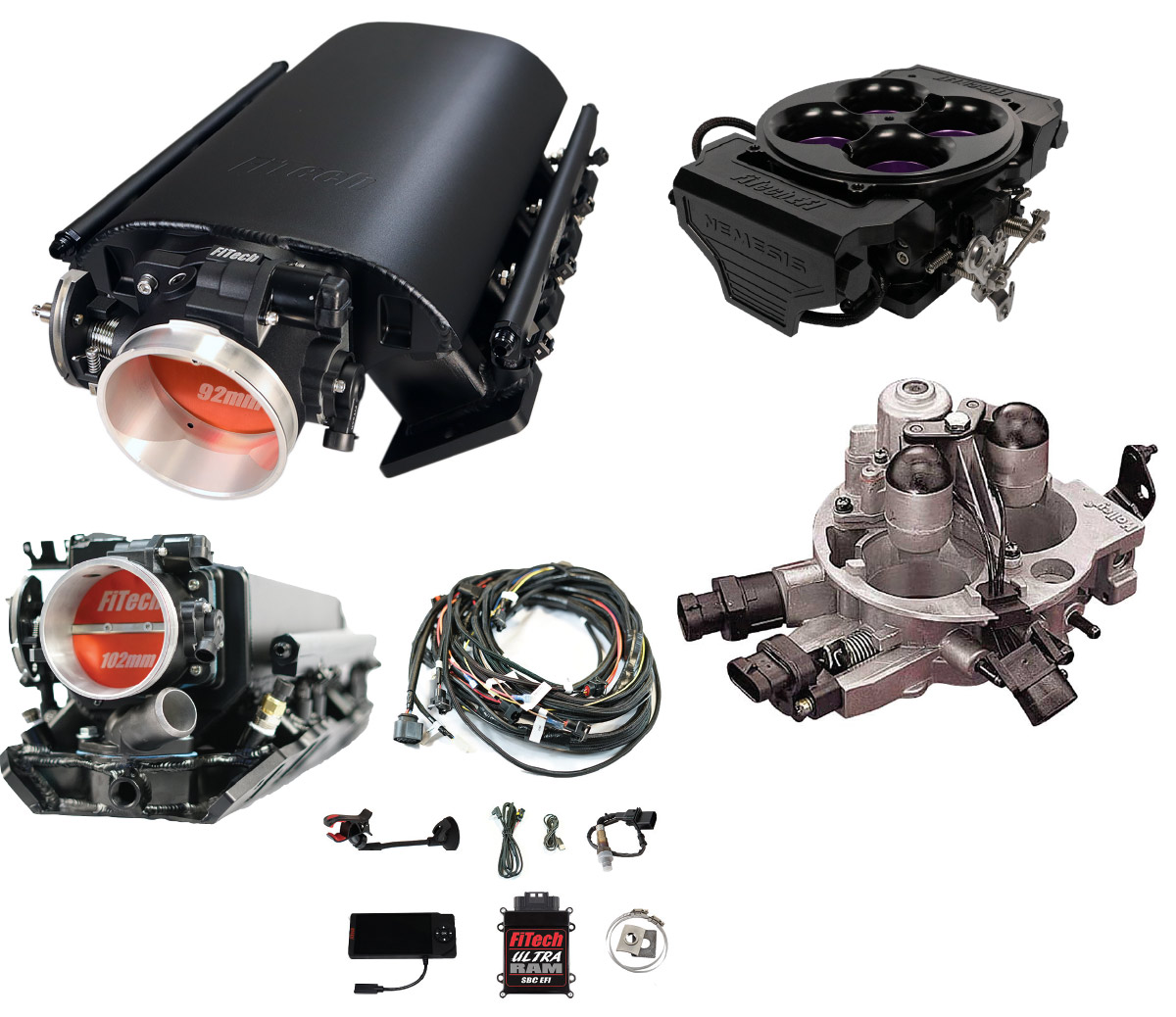
TBI feeds the manifold, multi-port feeds the cylinders.
With a throttle-body system, fuel is introduced above the intake manifold. The manifold then has to carry that air/fuel mixture to each cylinder. That makes it a wet-flow system, and it means manifold design matters a lot. Distribution is not just about airflow. It is about fuel distribution, too.
Multi-port changes that. Each cylinder gets its own injector mounted near the intake port. The manifold and throttle bodies just carry air, and the fuel is delivered much closer to where it is needed.
That is why Evan Perkins, owner of Westech Performance, put it so plainly: “A TBI is always going to be subject to the whims of the manifold.” That may be the cleanest summary in this whole conversation.
TBI can make serious power, but once you get into heavier-duty combinations, multi-port starts winning because of “cylinder to cylinder balance.” That is the real dividing line. Not whether TBI can make horsepower but whether you have enough control over how each cylinder is made.

If you are dealing with a carbureted small-block, big-block, W-motor, FE, early Hemi, Pontiac, Olds, Buick, or similar traditional V-8, a throttle-body system bolts into familiar territory. You can often keep the intake, linkage, air cleaner style, and overall look of the engine bay. The swap feels more like replacing a carburetor than redesigning the entire induction system.
TBI kits solve tons of problems in custom applications, too. Eddie Vasquez at FiTech told us about customers with farm equipment in extremely cold climates, some with rotary engines with limited aftermarket support and others with oddball classic engines.
Alford said he would steer a customer toward TBI for three main reasons: simplicity, lower initial cost, and preserving the carbureted look. Vasquez made the same case from the practical side. Most of the customers using throttle-body EFI on older engines are doing it because it is cost-effective and easy. Pull the carb, bolt on the throttle body, supply it with high-pressure fuel, and go.
That is why modern TBI works so well on street trucks, cruisers, mild performance builds, and old-school combinations where packaging matters more than chasing absolute control.
For most traditional carb-era builds, TBI is not the compromise answer. It is the correct one.

If you want finer tuning, more room for growth, and more control over each cylinder, multi-port is better. That does not mean TBI suddenly stops working. It means the margin for error gets smaller, and the cost of being wrong gets bigger.
Perkins said a multi-port setup gets “as close as possible to the exact amount of fuel into each cylinder.” That is the whole game. With TBI, the manifold still decides too much. With multi-port, the ECU and tuner have a more direct path to each hole.
That becomes a much bigger deal on high-compression engines, bigger cams, serious boost, hard race use, or anything where one lean cylinder can ruin your day. Perkins described a boosted TBI combination where the safe tune had to be built around the leanest cylinder.
If you are building an LS, Coyote, Gen III Hemi, or other engine that already started life with port injection, multi-port is usually the smarter path unless you are chasing a carb-style look for packaging or aesthetics.
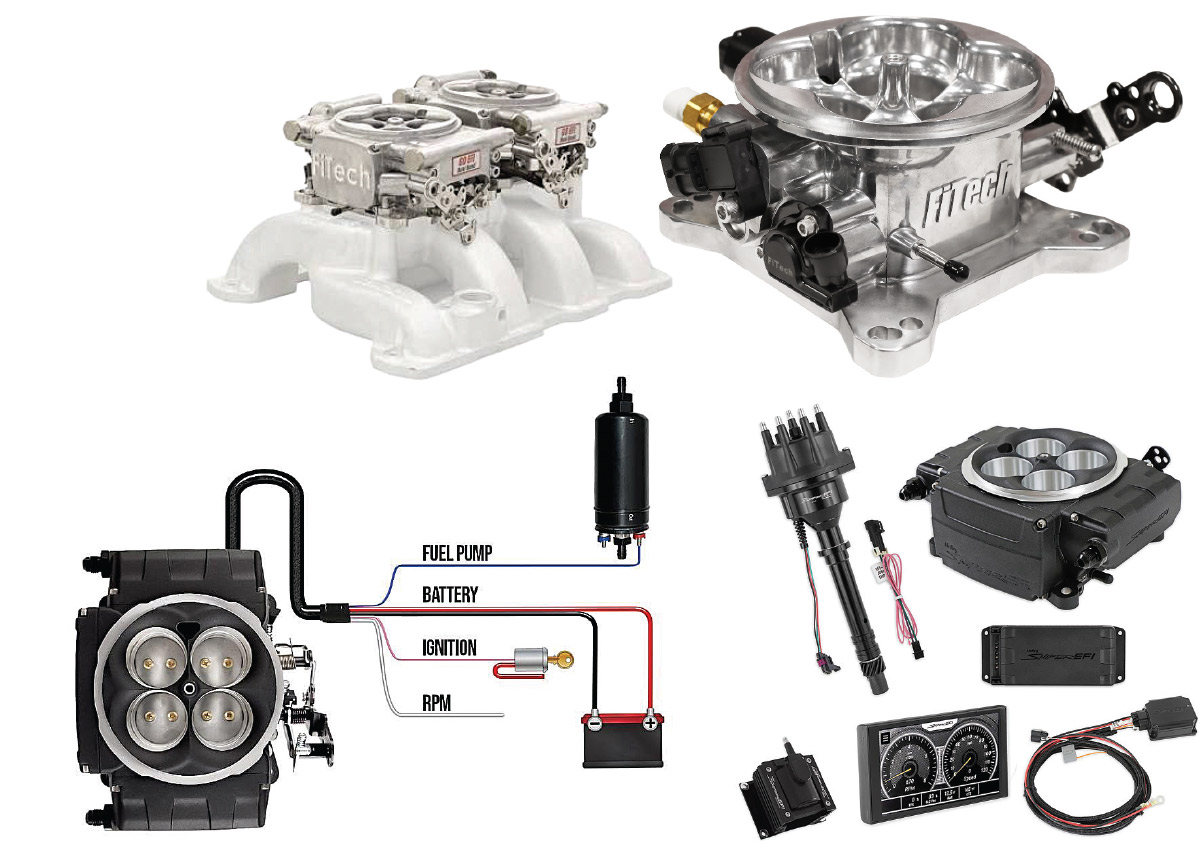
But TBI has made the middle ground way more attractive than it used to be.
Perkins pointed out that a carb has the best fuel-cooling effect, TBI comes second, and multi-port comes third. Because TBI introduces fuel higher in the airstream, it gives the charge more time to cool before it reaches the chamber. That can be a real benefit on a blow-through or roots-blown setup.
Vasquez also pushed back on the idea that modern TBI is somehow soft in boosted applications. He said the real difference is tunability, not whether the system can support the boost or horsepower. Once it is tuned, he said, “you can hang with the big guys.”
That matters on old-school engines. A roots blower with carb-style mounting pads, a dual-quad setup, a Tri-Power intake, or a carb-flange turbo combination often leans naturally toward throttle-body EFI. In those cases, TBI is not a shortcut, it is the packaging answer.

Respect the wiring. All were in agreement: EFI is completely dependent on installation quality. Good grounds, clean power, and correct wiring are not optional. TBI systems with the ECU in or on the throttle body can be more sensitive to electrical noise, so sensor wiring needs to stay away from ignition components, fan wiring, fuel-pump wiring, and other high-current or high-voltage sources. If wires have to cross, cross them perpendicular. Use resistor plugs and good suppression-style plug wires.
Respect the fuel system, too. A throttle body may bolt where the carburetor sat, but the rest of the system is no longer carbureted. EFI needs the right pump, real pressure, good filtration, clean electrical supply, and a tank or pickup setup that will not uncover when the truck launches, corners, or gets low on fuel. A lot of “EFI problems” are really fuel-system problems.
Tune for the weak link. On a mild build, a self-learning TBI kit can feel almost stupidly easy. On a serious build, you still need to think like a tuner. If the combination is boosted or pushing the edge, remember that the manifold is still doing part of the work. Read plugs. Watch trends. Do not assume the average is telling the whole truth.
Can you swap injectors? It’s been done, yes, but it’s not recommended. Most units are not designed to be disassembled by customers, but several on forums have done it.

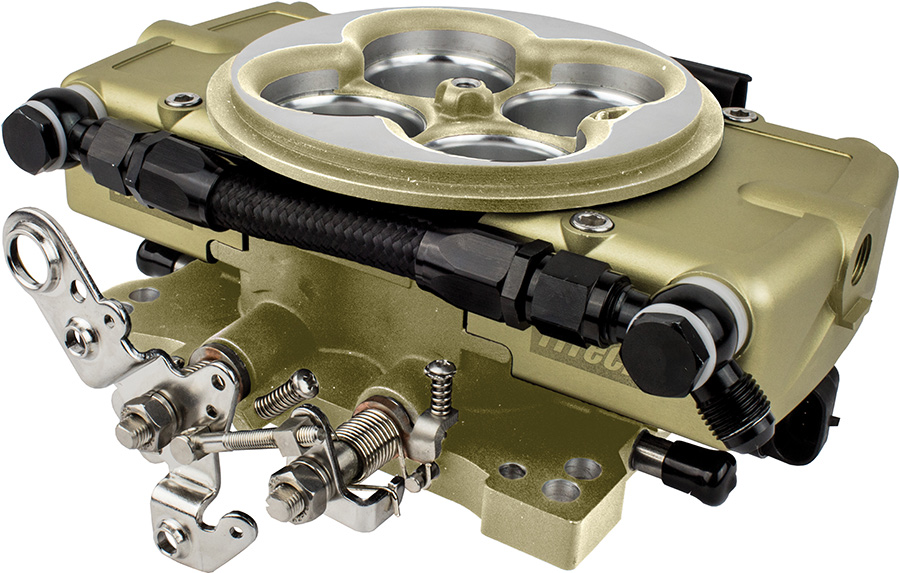
Holley still owns a big part of the conversation with Sniper 2 for straightforward carb-to-EFI swaps. Sniper 2 adds refinements aimed at making the system cleaner and less sensitive to the electrical gremlins common in old cars and trucks. Step up from there, and Terminator X Stealth starts making sense for builders who want more capability, more tunability, and a carb-style appearance in a more serious package.

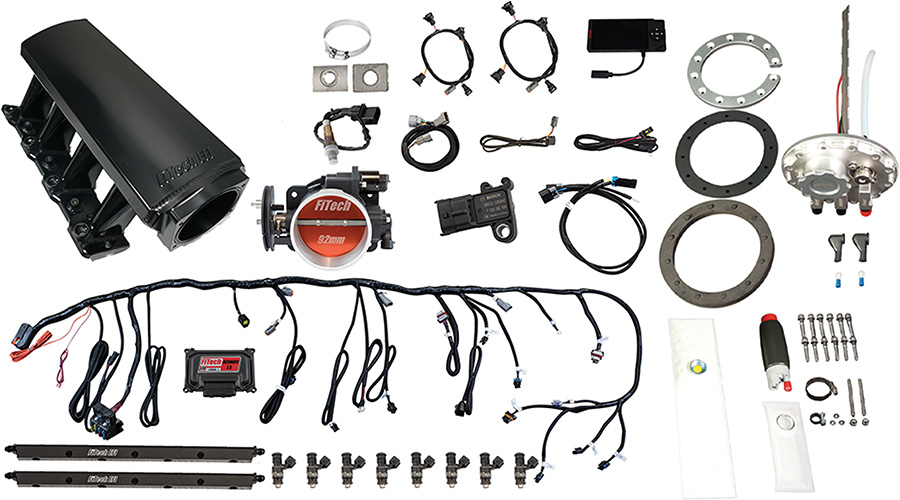
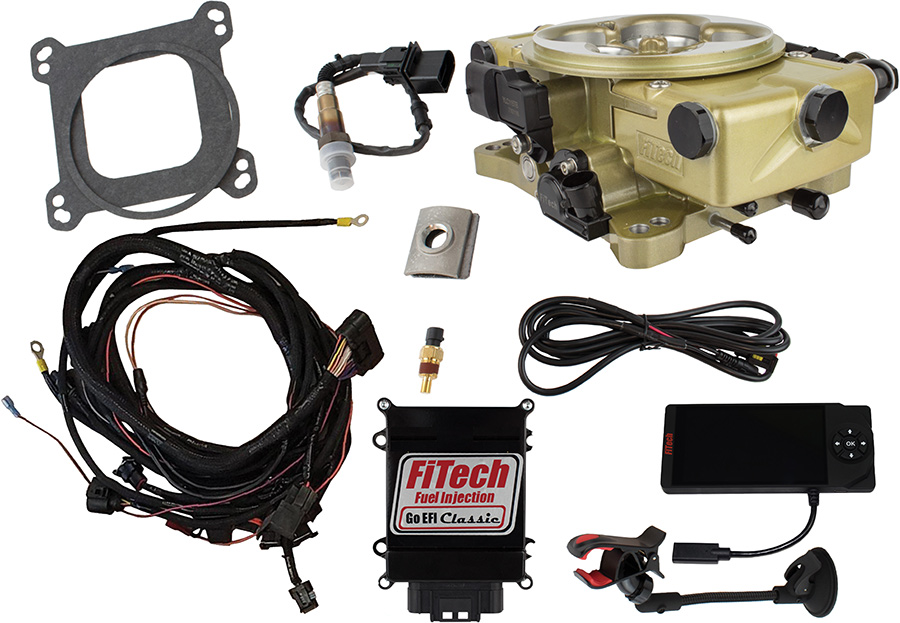
For most traditional carb-era small- and big-block builds, modern TBI is the smart answer. It is easier to package, easier to install, easier to live with, and far more capable than people who still think in 1987 want to admit. It will not out-control multi-port, and it should not have to. That is not the point. The point is that it finally delivers on the original promise of TBI: rock-solid EFI behavior in a format that still makes sense on an old engine. For a lot of trucks and old-school V-8 cars that is not the cheap answer. That is the right one.