


CTP Tech
InTheGarageMedia.com
Proper Stoppers
Part 2: Wilwood’s New XRS Discs … for OBS
Close-up of the rear wheel area of a blue body-dropped pickup truck. A black and chrome multi-spoke wheel reveals a large disc brake rotor and a purple Wilwood caliper. A "350 SS" decal is visible on the truck bed above the wheel.
Last month, Jessica Roach introduced you all to Wilwood’s latest, the XRS system, for the Chevy/GMC OBS platform, with the installation of the front discs on her fiancé’s body-dropped Chevy. This month, she and Jon wrap things up with the electronic parking brake–equipped 14-inch rears as well as the tandem master cylinder, once again detailing the entire step-by-step process.
By Jessica RoachImages By The Author
W

hen it comes to worthwhile upgrades on the beloved 1988-98 Chevy, the rear brakes are one of the most overlooked—but most rewarding—places to start. Anyone familiar with these trucks knows the factory rear drums aren’t exactly confidence inspiring. Sure, you can tweak them, adjust them, clean them, and follow countless DIY videos on how to squeeze a little more life out of GM’s original setup. But eventually, the brake fade, uneven stopping, constant adjustments, and overall clunky feel make it clear: it’s time for something better.

A rear disc brake conversion may sound like a big step, but, in reality, it’s one of the easiest ways to improve consistency, braking power, and overall driveability. Rear discs mean less maintenance, cleaner operation, and far more predictable stopping—especially if your truck actually gets used the way these trucks were meant to be used. And, let’s face it, an iconic workhorse like the 1988-98 Chevy deserves modern braking performance, not 30-year-old drum technology. The real question becomes: who offers a complete rear disc kit that upgrades performance without adding unnecessary complications?

After more than two decades personally installing Wilwood systems on muscle cars, hot rods, and daily driven trucks, we were eager to see what they brought to the table for this platform. That’s when we came across the XRS calipers—a street-friendly evolution of the XRZ race calipers—built from forged aluminum, impressively stiff, and incredibly lightweight. We also made the necessary switch to their Compact Tandem Master Cylinder, which included the option to color-match the calipers. In this rear-brake conversion and master cylinder walkthrough, you’ll see how Wilwood managed to put together a clean, high-performance, and surprisingly simple rear disc kit—one you can absolutely install in your own garage, just like we did.

Close-up of a rear drum brake assembly with five wheel studs, mounted on a blue truck. The vehicle is lifted, showing suspension parts and a floor jack in the background.
1. Prepare the rear for the wheels and rear brakes to come off. The rear is a little more in-depth as far as install, so make sure you are prepared to get a little messy.
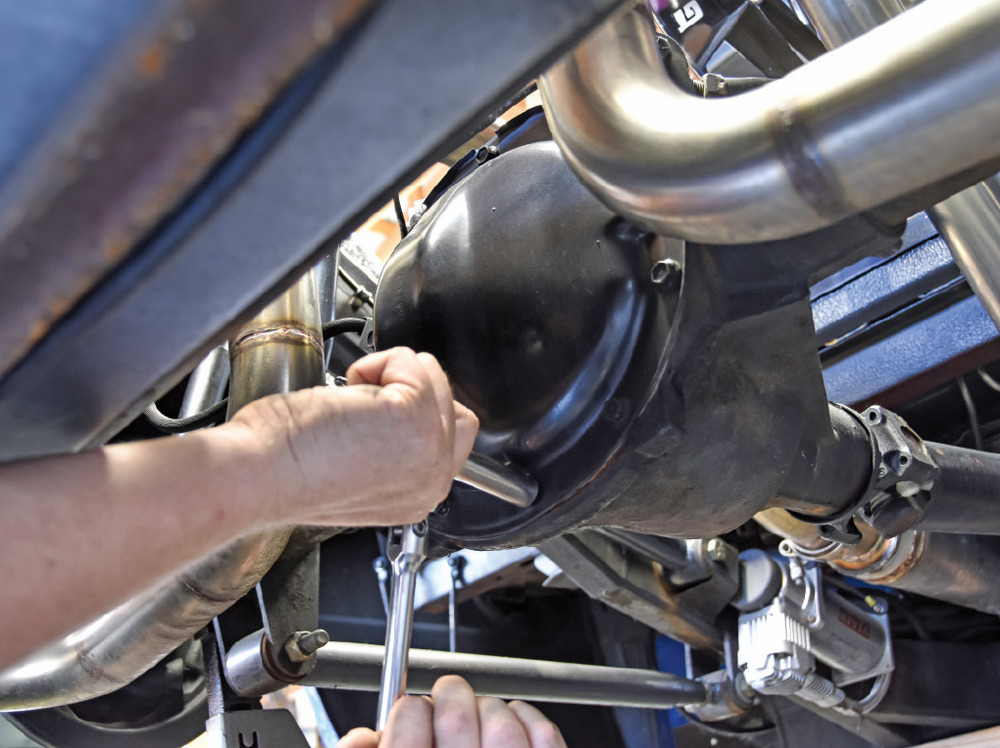
Hands using a socket wrench to unbolt a black differential cover on a vehicle's rear axle. Exhaust pipes and chassis components are visible under the blue vehicle body.
2. First off, unbolt the housing over a catch pan. We will be pulling the axles out to get the rest of the brakes off.
Extreme close-up of a differential gear assembly. A hand is removing a small threaded pin shaft bolt from the center section near the ring gear.
A hand removes a cylindrical cross-pin shaft from the center section of an oily differential gear assembly.
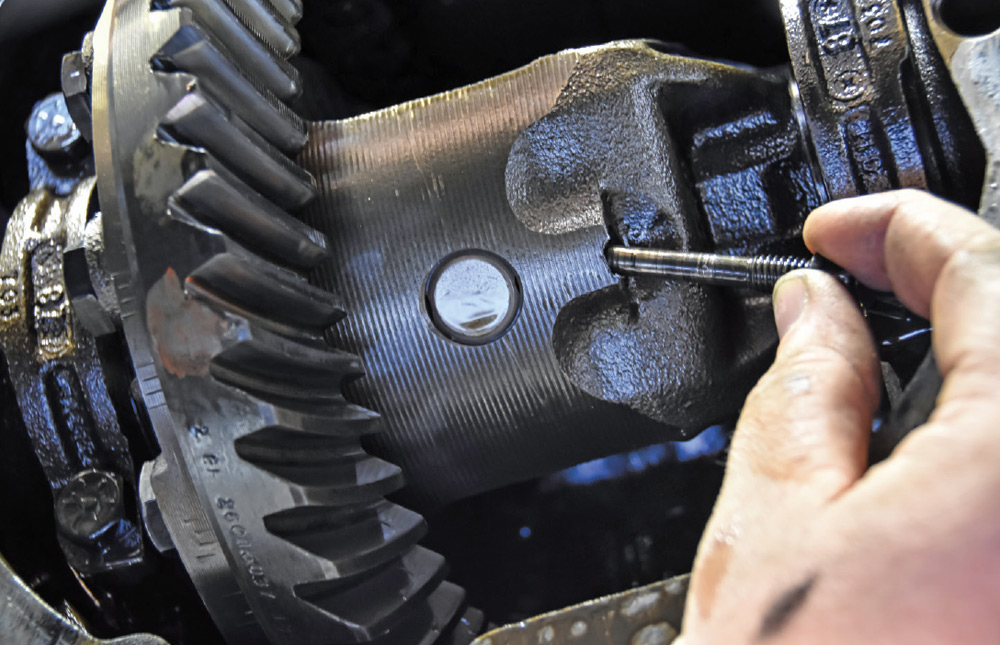
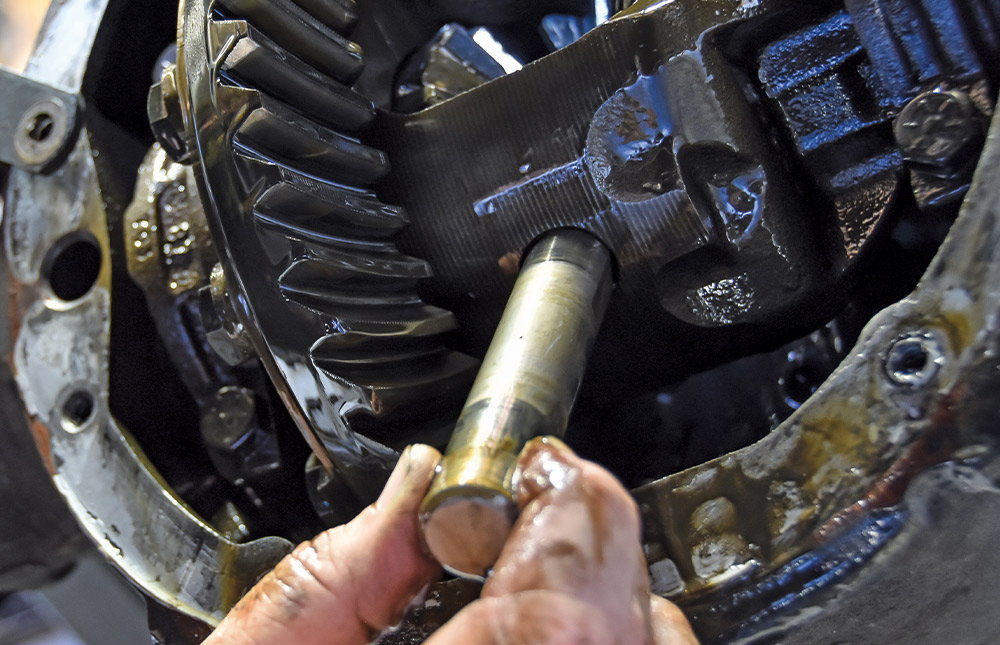
3-4. Locate the pin shaft bolt on the centersection, remove it using a 5/16 wrench. Locate the cross-pin shaft, push/pull to remove and it should slide out. There are two retainer clips on either end of the axles, remove by sliding them out. This is difficult to photograph but once you stick your head in there you can see each retainer.
Hands removing a curved brake shoe from a five-stud axle hub. The vehicle is supported by a jack stand in a garage setting. A small red square with the number 5 is in the upper left corner.
Hands pulling a long metal axle shaft out of a rear axle housing. The brake backing plate remains with the wheel cylinder attached.
5-6. Begin removing what’s left of the rear brakes on either side, along with the axles. We decided to leave the cylinders attached to help prevent any brake fluid from bleeding out and getting on the floor. We are doing this in our home garage and not on a lift.
A top-down view of brake parts on a concrete floor: a black Wilwood adapter plate, an axle retainer, silver bolts, washers, nuts, and a tube of red Loctite.
7. Gather the axle retainer and adapter that houses the caliper bracket and emergency brake bracket, along with the supplied hardware and some red Loctite.
A hand inserts a bolt into a black circular Wilwood adapter plate mounted on an axle housing. The plate is labeled "CHEVY C1500".
Hands using a socket wrench and an open-end wrench to tighten bolts on a black Wilwood adapter plate mounted on an axle flange.
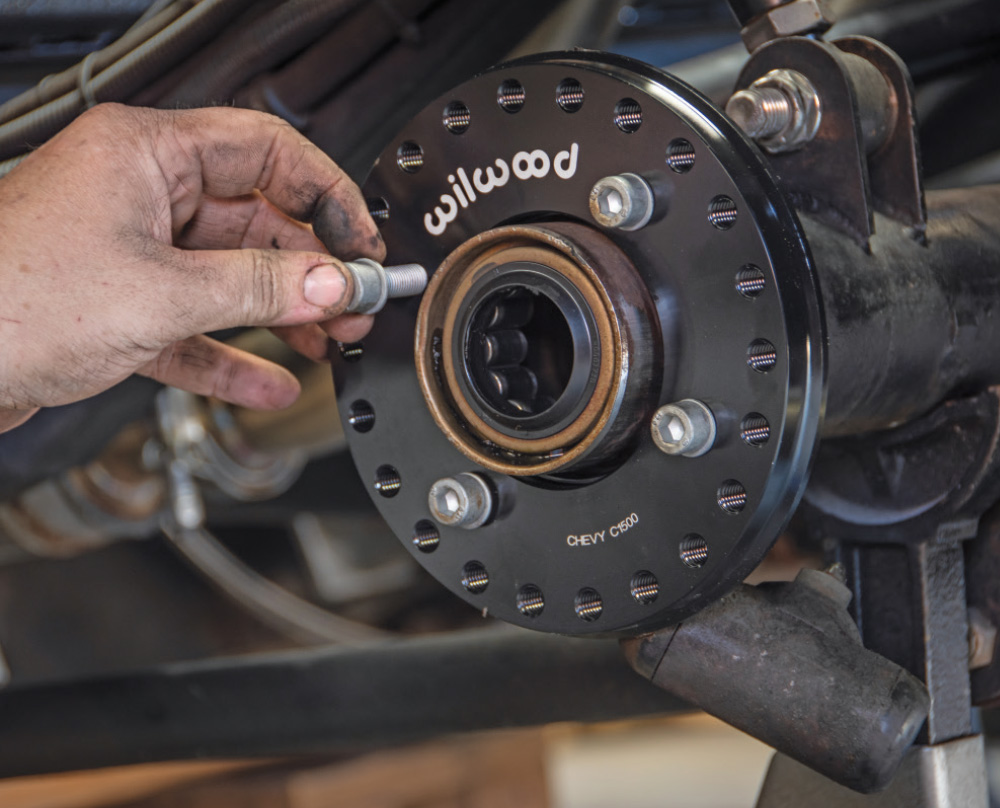
8-9. Slide the axle retainer first and then the adapter onto the axle flange housing, slide bolts into the four holes with appropriate washers, and tighten to supplied torque specs with the red Loctite.
Hands sliding a metal axle shaft into an axle housing fitted with a black Wilwood adapter plate.
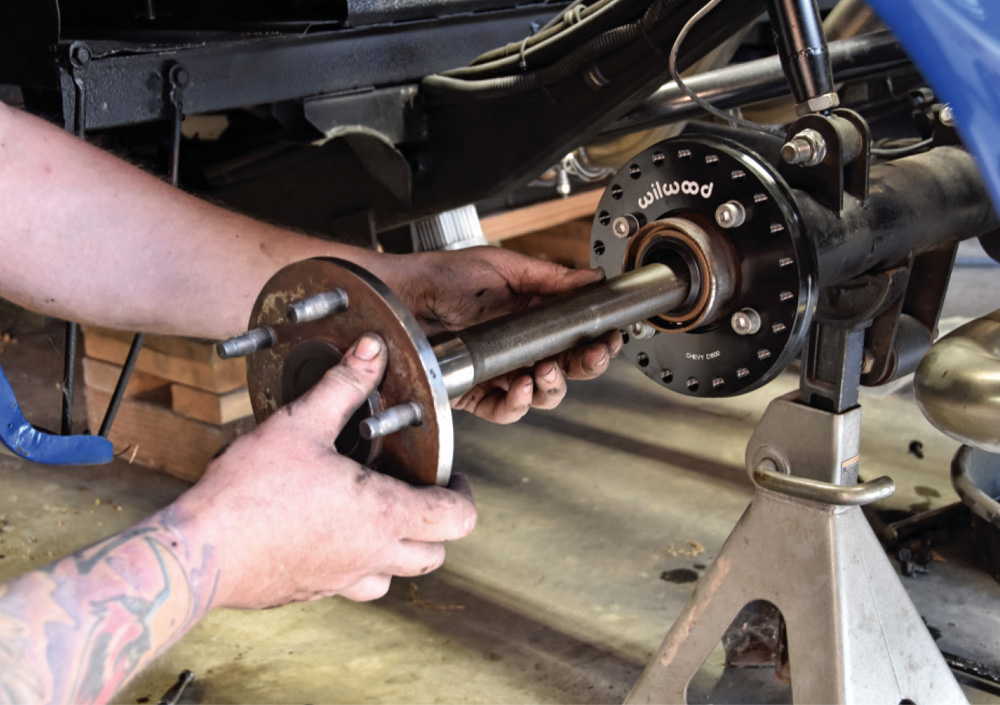
10. At this point you are ready to slide your axles back into the housing, along with the pin shaft bolt, cross pin shaft, and retainer clips for the axles. You can also take this time to re-seal your cover back onto the housing.
Hands using a digital torque wrench to tighten bolts on a black brake rotor assembly seated inside a polished chrome wheel rim.
11. We took the time to assemble all the rotors in the beginning with the front hub available to help prevent damage and save some time. Remember to torque them to the supplied specs. You don’t have to do it this way; we just know what works for us.
Hands positioning a black slotted and drilled Wilwood brake rotor onto wheel studs of a blue vehicle.
A hand installs a black caliper bracket onto a black slotted and drilled disc brake rotor mounted on a rear axle.
12-13. Slide the rotor on (make sure you have the correct side, they are directional), use your lug nuts to keep it on, and keep it seated against the axle. Locate the caliper bracket in your kit, slide it on as pictured. Using supplied hardware loosely, we will have to come back and shim it like we did the front.
Hands sliding a blue Wilwood brake caliper onto a black slotted and drilled disc brake rotor mounted on a rear axle.
14. Grab your caliper, slide it on, and repeat your process from the front brake to center the caliper to the rotor.
Close-up of a blue Wilwood brake caliper being held, with a finger pointing to a silver metal pad retainer pin being installed through the brake pads.
15. Once your calipers are centered on the rotor, remove the caliper and install pads using Wilwood pad retainers. Gently bump them in with a small hammer.
Close-up of a hand using a socket wrench to tighten a bolt on a blue Wilwood brake caliper. The caliper is mounted over a black disc brake rotor.
16. Remove hardware on the bracket one by one and re-install with shims, red Loctite, and supplied torque specs. Install the caliper using supplied nuts and washers, with red Loctite and supplied torque specs.
Close-up of a hand holding a blue Wilwood electronic parking brake caliper, which is still partially wrapped in protective bubble wrap.
Close-up view from behind a wheel assembly showing a black Wilwood electronic parking brake bracket being bolted to an adapter plate. The bracket is secured with two silver bolts.
17-18. This truck is also getting the new Wilwood 14-inch Electronic Parking Brake. The E-brake bracket will mount easily on the already-placed adapter plate sandwiched between the flange and rotor. Loosely install with supplied hardware, because we will have to come back and shim it.
A hand uses a wrench to adjust or tighten the mounting hardware for a small blue Wilwood electronic parking brake caliper. The caliper is mounted to the side of a large black slotted and drilled disc brake rotor.

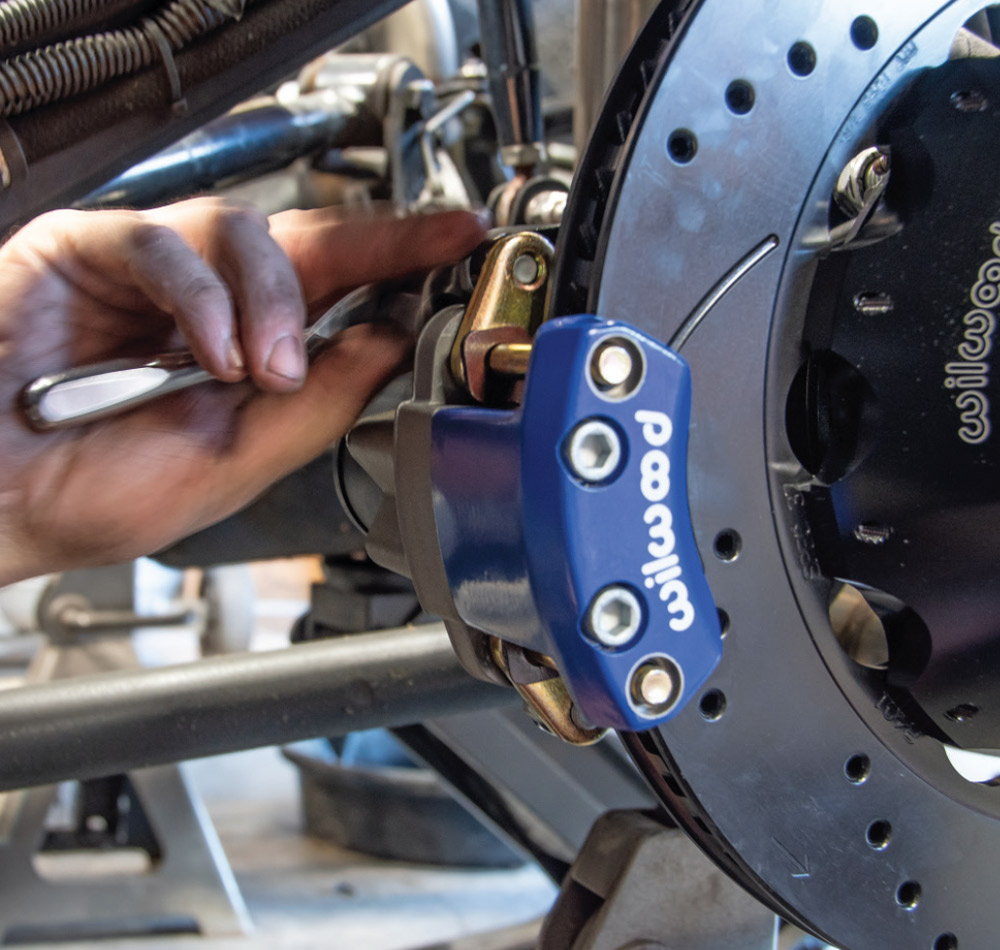
19. Install the e-brake anywhere you want it … literally. The adapter plate allows you to go all the way around. Loosely install with supplied hardware and center the caliper on the rotor with supplied shims. Once you are satisfied, take the mounting hardware off one by one and reinstall with red Loctite and supplied torque specs.

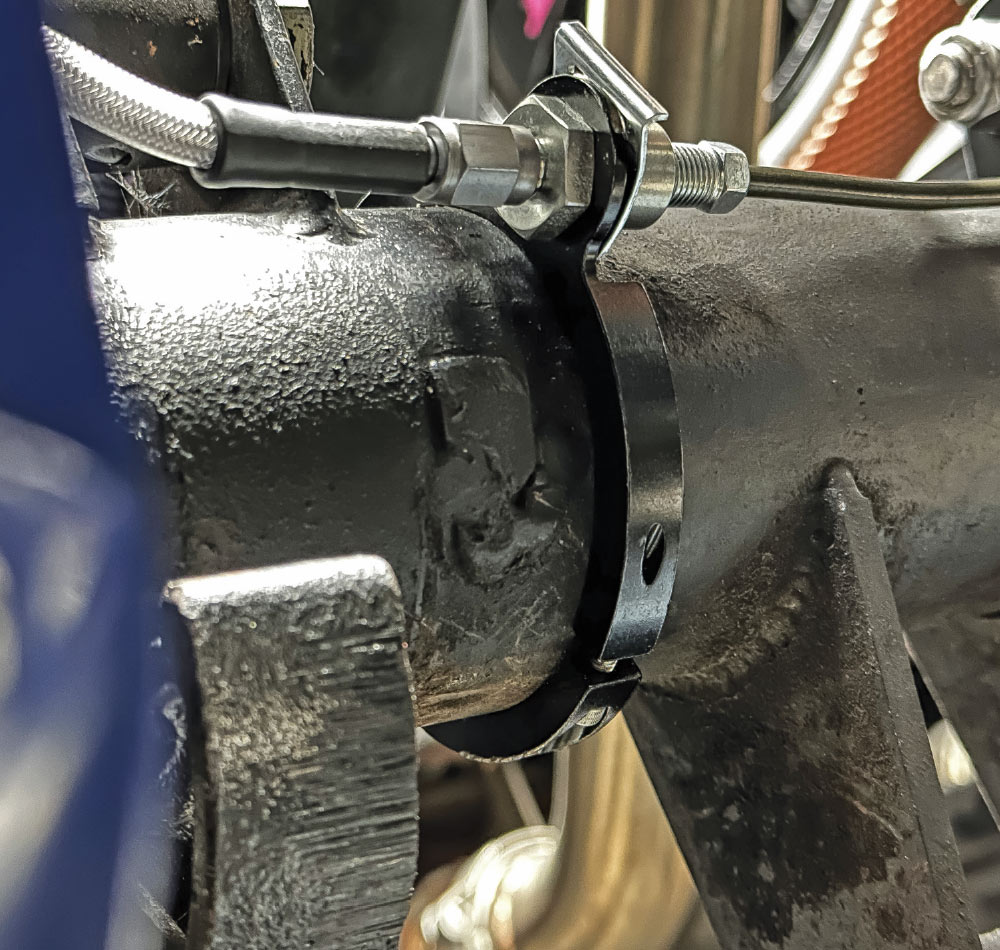
A blue Wilwood brake caliper is mounted on a slotted black rotor. A braided stainless steel flexible brake line connects the caliper to a hard line, secured by an aluminum clamp on the rear axle housing.
Close-up of a black Wilwood aluminum clamp-on tab secured around a vehicle axle, holding a brake line fitting.
20-21. Remove the cylinders you left behind if you had chosen to do so. A modified rearend narrowed 3 inches on both sides causes us to use a flexible brake line and very convenient aluminum clamp-on tab (Wilwood PN 220-17289). We purchased new steel brake lines bought at our local parts store because the old ones are an eyesore. In most stock cases, you typically would cut back and re-flare the lines instead.
19. Install the e-brake anywhere you want it … literally. The adapter plate allows you to go all the way around. Loosely install with supplied hardware and center the caliper on the rotor with supplied shims. Once you are satisfied, take the mounting hardware off one by one and reinstall with red Loctite and supplied torque specs.
20-21. Remove the cylinders you left behind if you had chosen to do so. A modified rearend narrowed 3 inches on both sides causes us to use a flexible brake line and very convenient aluminum clamp-on tab (Wilwood PN 220-17289). We purchased new steel brake lines bought at our local parts store because the old ones are an eyesore. In most stock cases, you typically would cut back and re-flare the lines instead.
Black corrugated wiring looms are zip-tied along a metal frame rail on the underside of a vehicle. A section of the loom loops down toward the suspension components.
A black Wilwood control module mounted to a vehicle panel. A wiring harness with a purple connector is plugged in. Red and black wires are routed nearby with clamps.
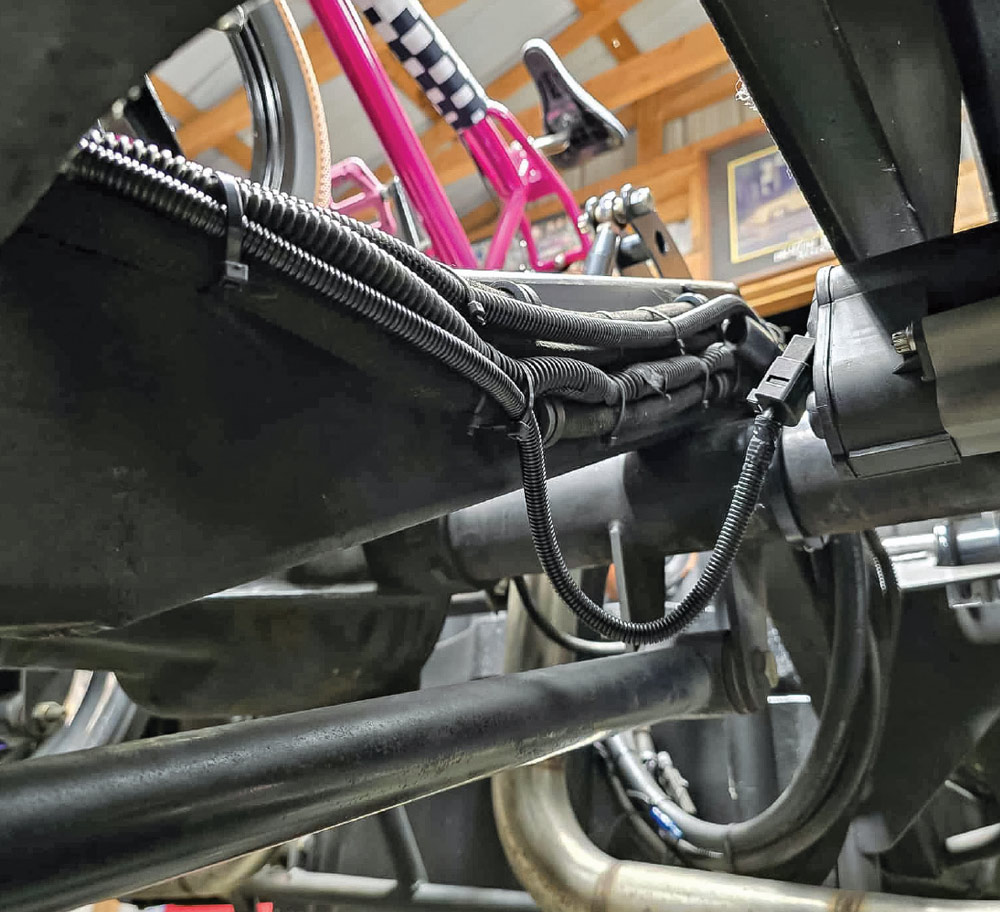
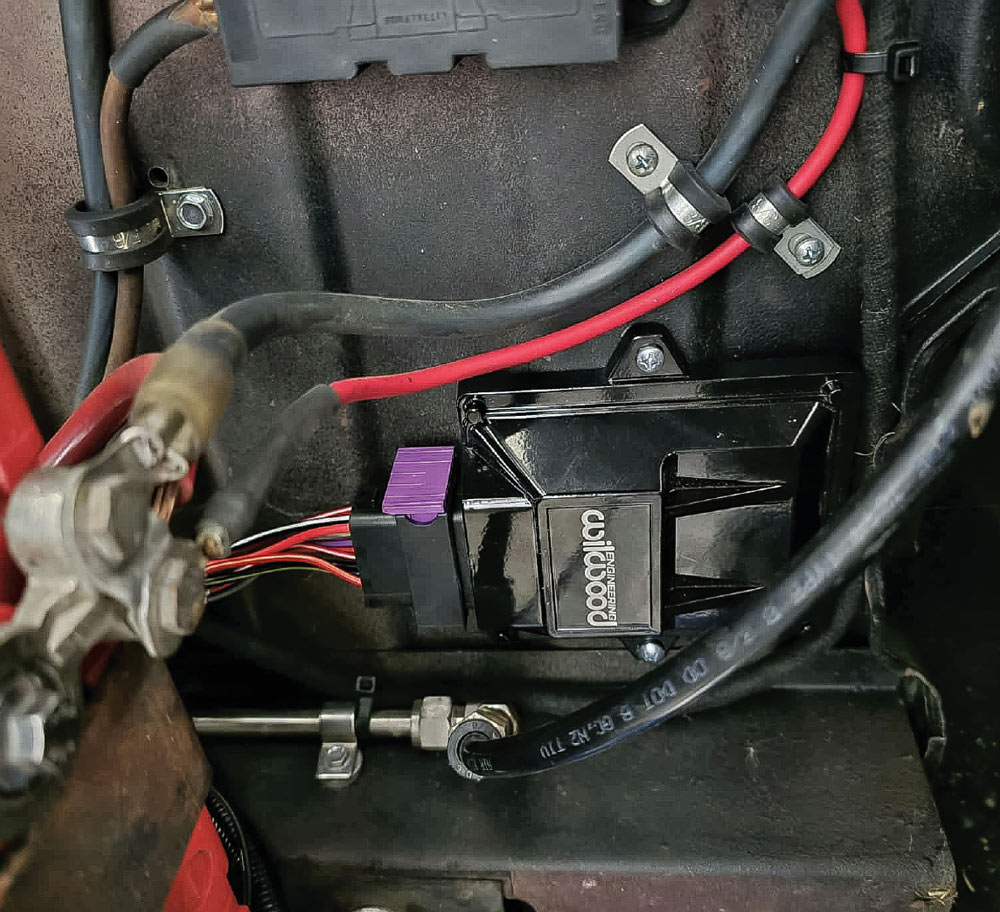
22-23. Now that all the lines are mounted, we can begin running the wiring for the e-brake. This setup will be a little different than most should and will apply, but we are dictated by a truck that is body-dropped and lays completely on the ground, which is why we left a section drooping down to allow for suspension travel. It is recommended to mount the control module inside the cab for weather purposes, but we obviously had limited choices on where to mount because the harness is meant for the stock battery location (ours is under the bed) and meant to mount anywhere under the dash. We will custom build a close-out panel that will help protect the control module.
Underside of a vehicle cab with black wire looms passing through a rubber grommet in a silver metal panel. Red and white wires are visible.
A circular metal switch with a small toggle is mounted on a black panel secured by two screws.
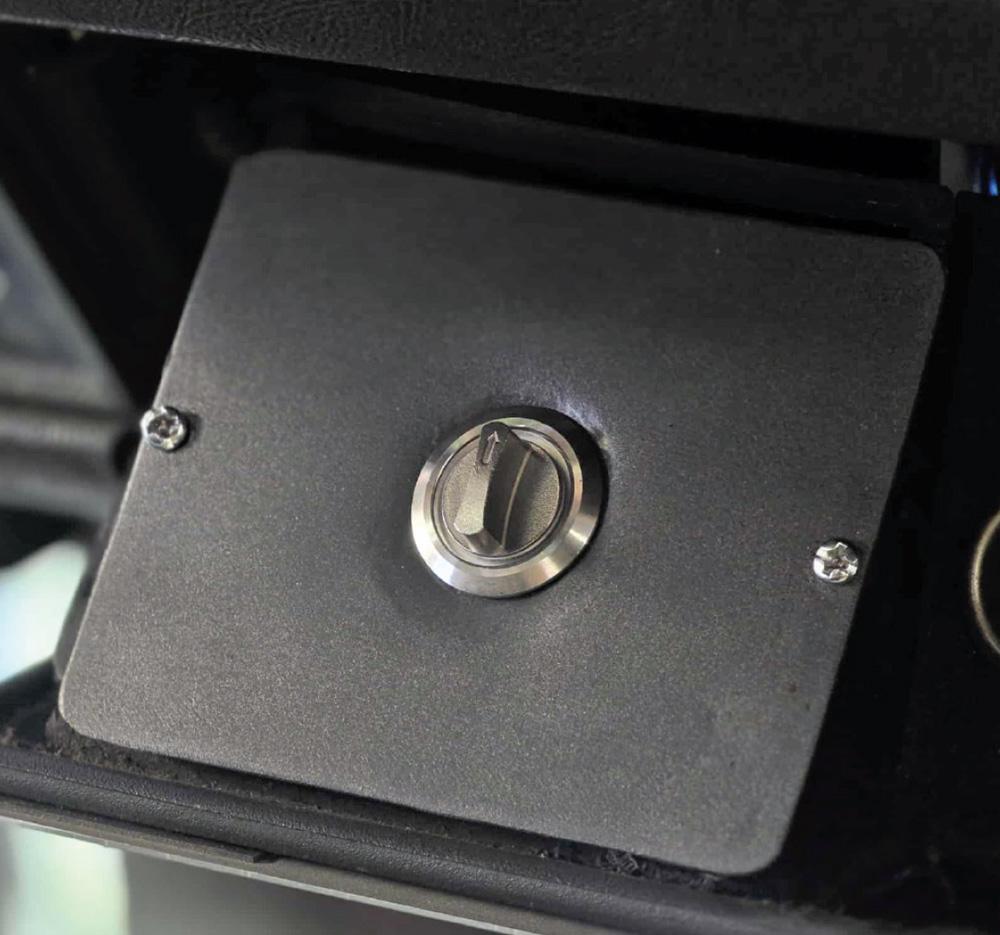
24-25. We drilled a hole on the bottom side of the cab and applied a rubber grommet, running the wires through the hole and to the desired area we wanted the e-brake switch. We extended the wires by hand to give us the option of mounting under the dash where your ashtray would typically be.

Master Cylinder

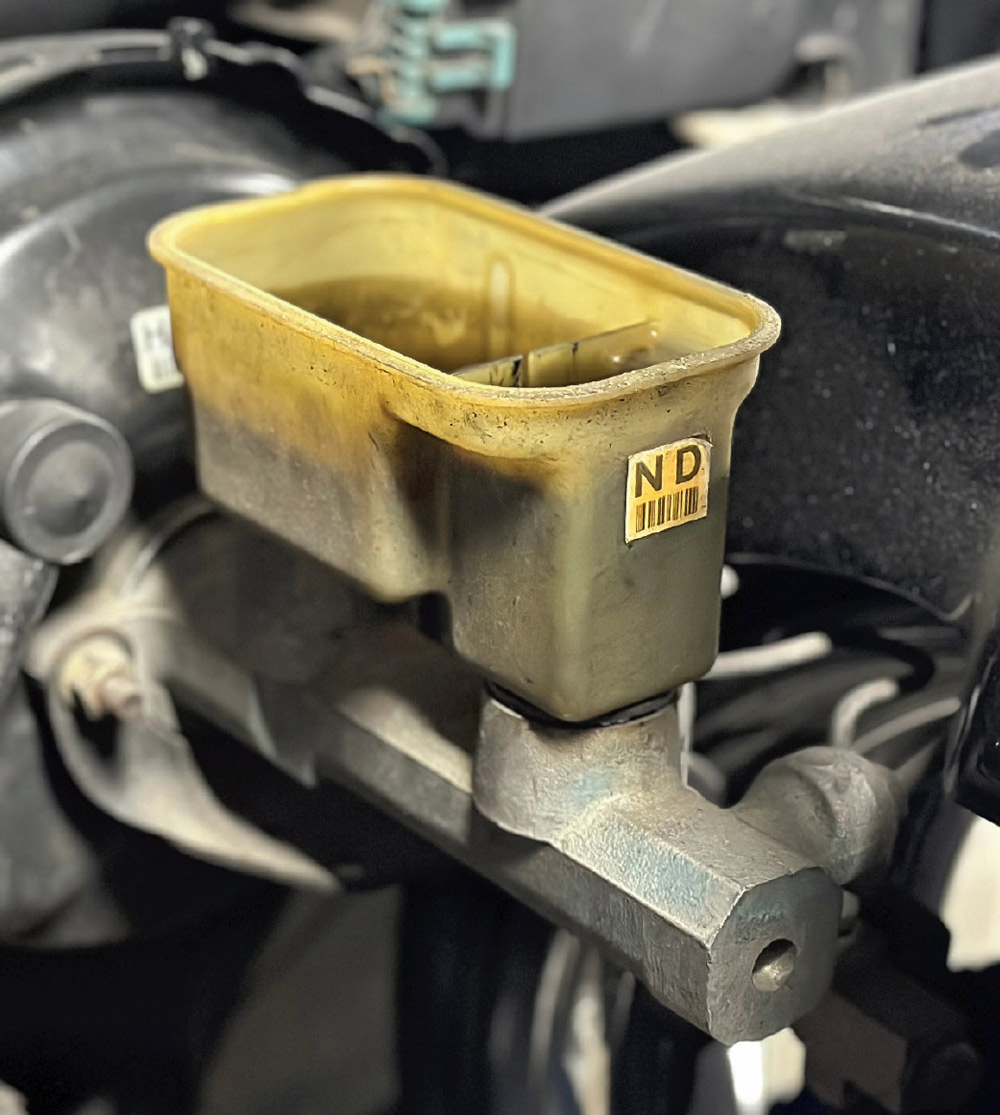
A weathered translucent plastic brake fluid reservoir with an "ND" label is mounted on a metal master cylinder.
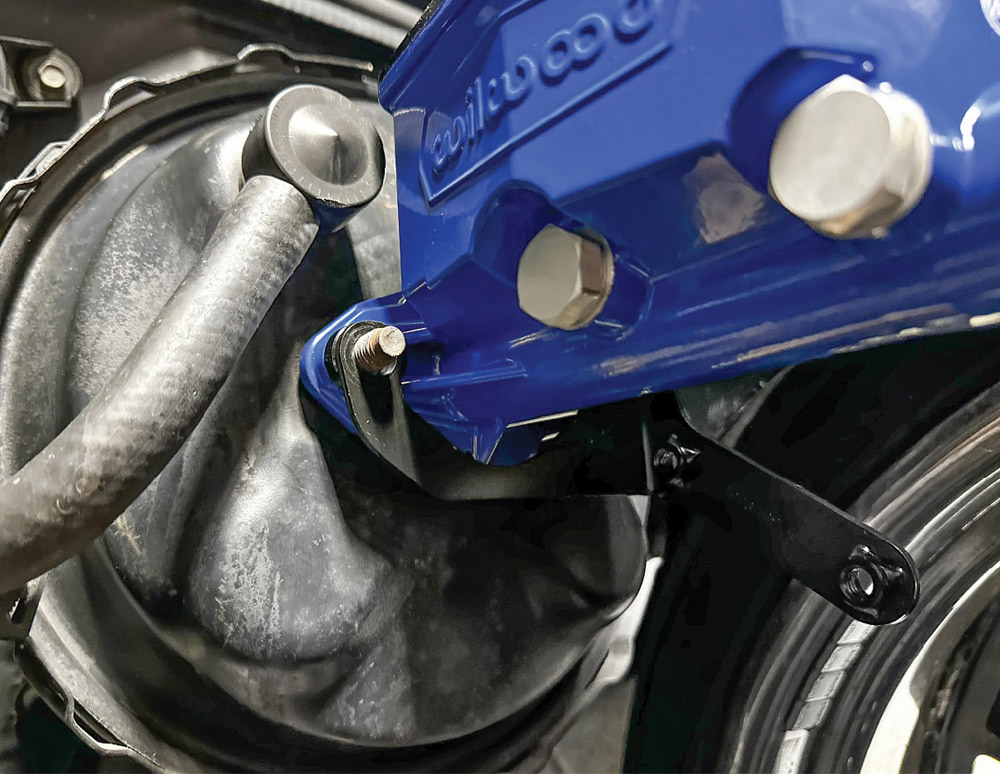
26. Installing the Wilwood Compact Tandem Master Cylinder: Remove old brake fluid, remove stock brake lines from the master, and unbolt the master from the booster.
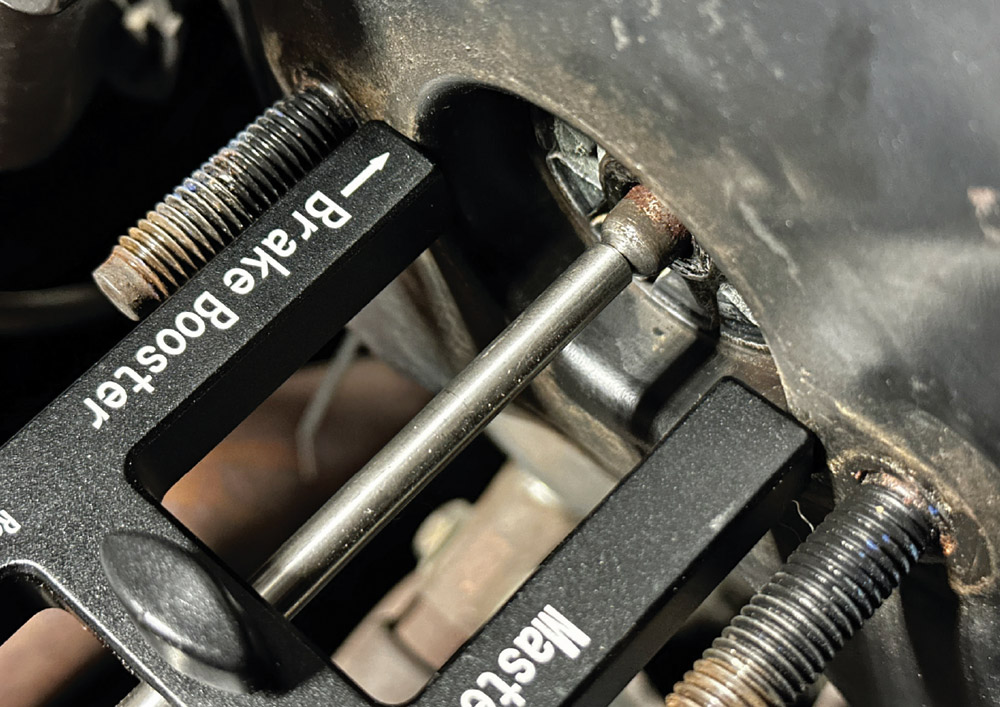
A black Wilwood depth measurement tool is placed against a brake booster to measure the push rod. The tool has "Brake Booster" and an arrow printed on it.
27. Using the supplied tool from Wilwood, measure the depth of your push rod inside your power booster and tighten the tool using the thumb screw.
A hand holds a black Wilwood tool against the back of a blue master cylinder to verify the push rod adjustment. The tool is labeled "Master Cylinder" with an arrow.
A hand holds a black digital caliper measuring a small metal component. The digital display reads 0.067 inches.
28-29. Flip the tool around, bottom the pin out in the master, and measure your gap between your mount surface and the face of the tool.
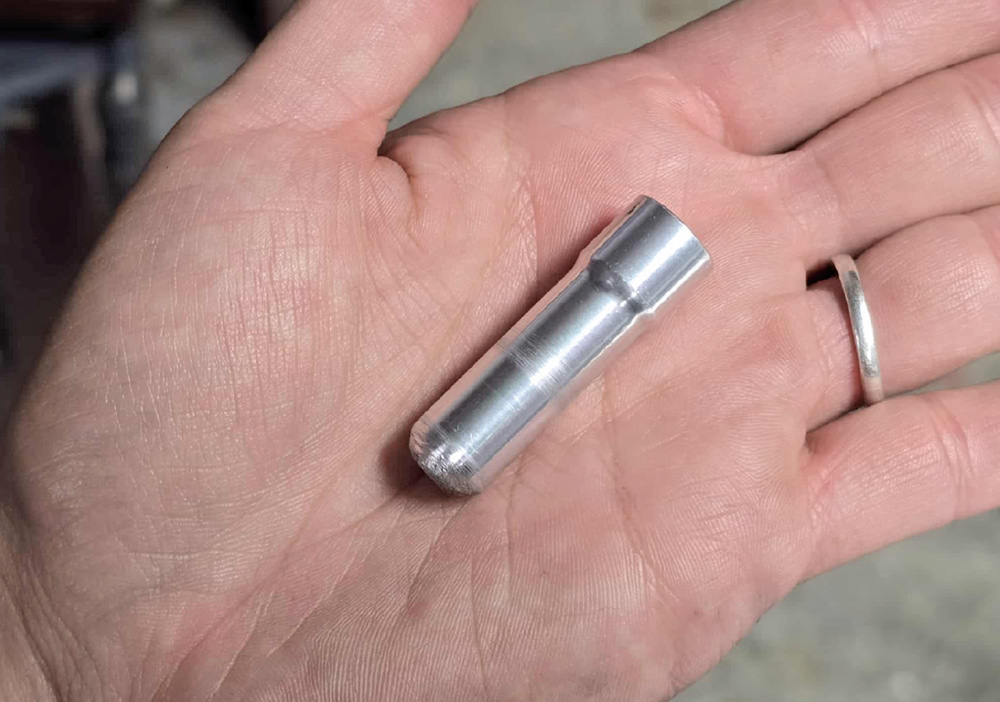
A palm holds a small, silver cylindrical metal pin with a rounded tip.
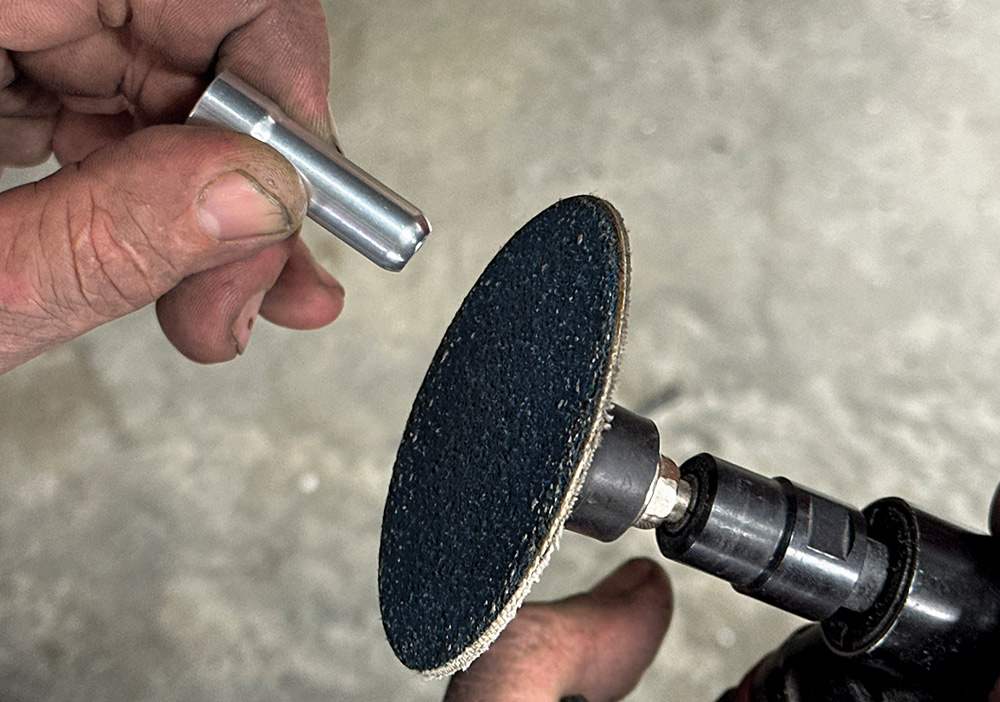
A hand holds a small silver metal pin near the surface of a black sanding disc on a handheld power tool.
30-31. Our gap measurement ended up being 0.067, and the recommended gap between the pin and bottom of the master is 0.030 and 0.100. For the least amount of pedal play, we decided to go with 0.030, which required us to remove 0.097. Remember to put the radius back in the pin after you get the desired length you want.
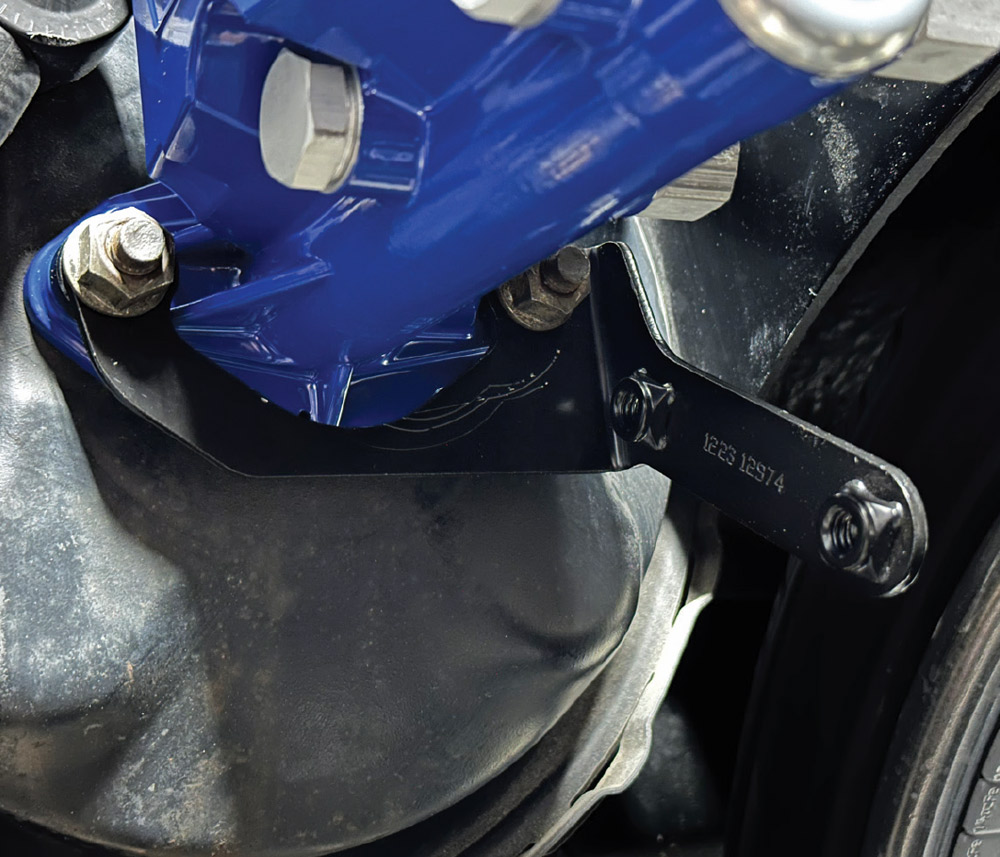
A blue Wilwood master cylinder is mounted onto a black brake booster with a black metal proportioning valve bracket in between.
32. Once the pin is modified, your master should slide on and bottom out to the booster. Slide the proportioning valve bracket below the master before adding your nut and washer. Your master bore size is determined by the amount of vacuum that your engine is making.
Close-up of the base of a blue Wilwood master cylinder secured to a black booster with nuts and washers. A black metal bracket is held by the same hardware.
33. Slide the supplied washers and nuts onto the bottom of the booster and tighten.
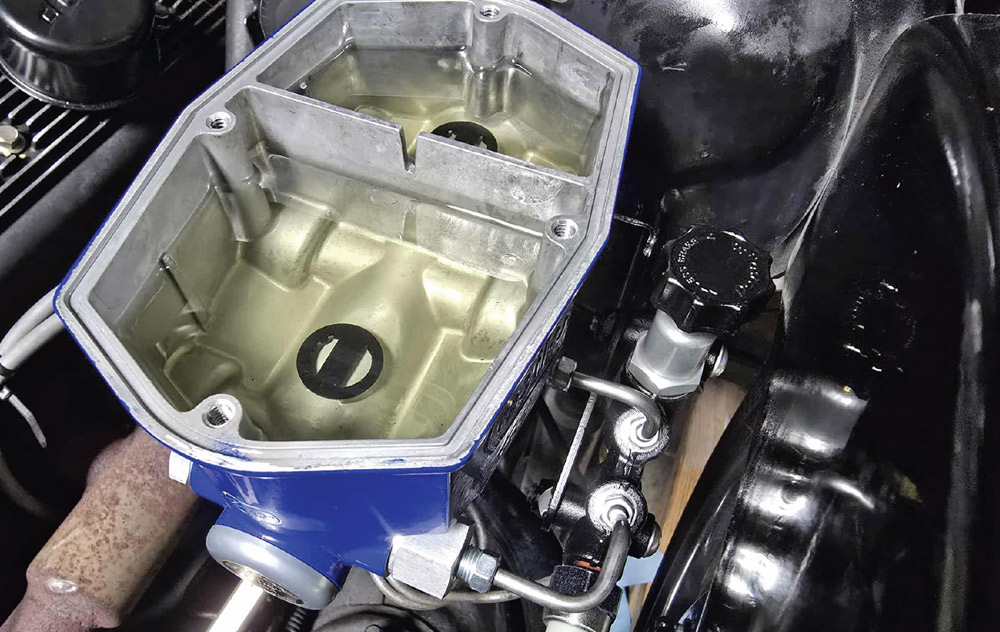
Top-down view of an open blue master cylinder reservoir with two fluid-filled compartments. Silver mounting nuts and washers are on the booster studs below. A silver brake line is attached.
34. After bench-bleeding the master (Wilwood always recommends doing so rather than after it has been installed) using the supplied bleeder kit and Wilwood’s Hi-Temp 570 DOT3 fluid, we carefully mount it to the factory booster. (Just to be safe, put a towel down in case a few drops leak out of the fittings.) Install the supplied stainless lines from the master to the proportioning valve.
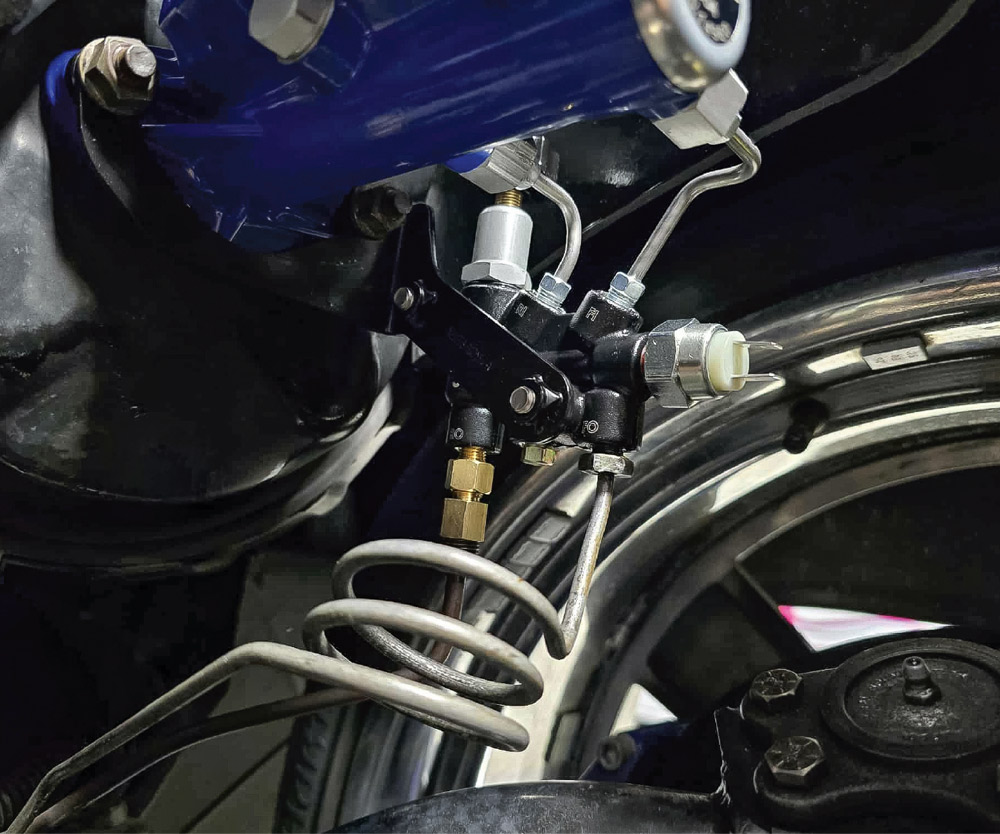
A black proportioning valve is mounted below a blue master cylinder. Multiple silver brake lines are connected to it, including one with a coiled loop. A brass reducer fitting is visible.
35. The rear brake line can vary from year to year on these trucks, and that required us to get a reducer from our local parts store (PN BLF-23B and BLF-17B) for the proportioning valve. Now attach your brake lines into the bottom ports of the valve. Open your proportioning valve fully to allow flow.
A hand uses a wrench to open a bleeder valve on a blue Wilwood 6-piston brake caliper. A clear plastic tube connects the valve to a fluid bottle hanging from the black disc rotor.
A hand using a wrench on the bleeder valve of a blue Wilwood 4-piston brake caliper. A clear tube runs from the valve to a fluid bottle hanging on the slotted rotor.
36-37. Hook your bleeder bottle up to the right rear corner brakes and have someone push up and down on the pedal slowly until there’s no air coming through. Work your way around the truck ending with the front left.
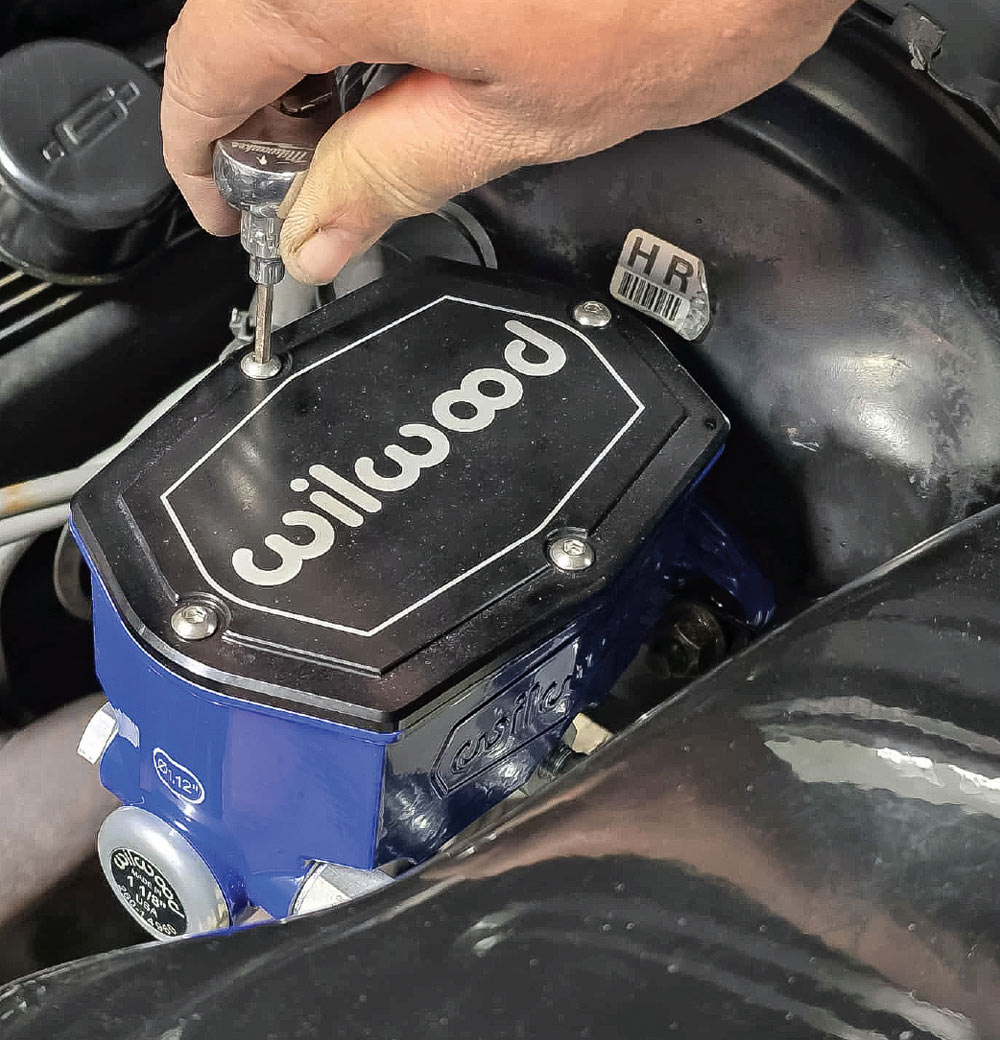
A hand uses a small tool to tighten a screw on the black lid of a blue Wilwood master cylinder.
38. Once your pedal feels good, fluid is full in the reservoir, and bleeders are tight, bolt your lid onto the master.