

CTP Tech
InTheGarageMedia.com
Maroon Chevy pickup being lifted off its stock chassis.
1. Matt Jones, president of Art Morrison Enterprises (AME), decided to update a 1996 Chevy pickup with one of his company’s new GT series chassis to prove how easily it can be done. With the body removed, the stock chassis was rolled away.
A New Look At OBS GM Trucks
Slipping An Art Morrison GT Sport Chassis Under An OBS Chevy
BY RON CERIDONO IMAGES BY LISA JONES
F

or many of us, hearing a truck described as “old” conjures up visions of a rusty hulk sitting in a farmer’s field. But today “old” is now included in the term “old body style” (OBS), which is commonly used to identify General Motors trucks produced between 1988 and 1998. The rise in popularity of these pickups is easy to understand as they are new enough that examples in good condition are readily available, they’re affordable, and look great with easily made modifications. All things considered, OBS Chevy and GMC trucks may well be the best bang for your buck on today’s classic truck performance scene.

One of the most common modifications to OBS trucks is lowering the ride height all around. But while dropping these pickups helps visually, handling and ride quality often suffer as a result of lowering done incorrectly. Suspension travel is often reduced, resulting in a rough ride, and changes in steering geometry can lead to vague handling and accelerated tire wear. More than 20 years ago Art Morrison of Art Morrison Enterprises (AME) saw the need for a bolt-on replacement chassis that offered that desirable contemporary stance with sports car–like handling along with full suspension travel for a comfortable ride. Today, under the leadership of company president, Matt Jones, that legacy continues with AME’s expanded line of replacement chassis, which now includes the GT Sport Series for OBS Chevrolet and GMC pickups.

Like GT Sport chassis, the OBS version is engineered for that specific series of trucks. The mandrel-formed frame is assembled and welded in a dedicated fixture. Up front is AME’s Sport IFS modern geometry that offers exceptional straight-line stability coupled with high-speed cornering ability. Tubular control arms are used with Wilwood spindles that will accept a range of disc brake components with rotors from 12 to 15 inches and calipers, including Dynalite, Dynapro, Superlite, and Aero6. A custom-valved 17.5:1 power rack-and-pinion steering is included and a variety of coilover shocks are available.

In the rear, the chassis uses hefty 1.375-inch-diameter four-links with Johnny Joints on both ends for maximum suspension articulation. A Watts link is used to keep the axle housing centered under the frame. As for engine mounts, the mounts to accept virtually any Chevrolet/GM V-8 engine are available and all popular manual and automatic transmissions can be accommodated.

With the new OBS chassis designed and in production Jones decided to build a truck to show how easily it could be done. The chassis installation is basically a remove-and-replace operation. The only fabrication required is the removal of a support under the bed. Expensive custom headers aren’t required, as anything that fits the stock chassis will work and exhaust can be routed in a traditional manner (instead of down one side of the chassis). The stock A/C system can be retained, and although there are some underhood components that may have to be relocated, there are accessory brackets available to make that easy to do. While they aren’t required, modified inner fender panels will allow the lowest ride height possible with maximum suspension travel.

Despite these trucks being called the old body style, they are still new enough that examples can be found in quite good shape. These are solid, well-built trucks that currently don’t demand the high prices that others bring, but then you get what you pay for. Jones was looking for one that had no rust and didn’t need to be repainted and that’s just what he found. While it’s true a pristine truck like this one will normally carry a premium price tag, by not having to budget for paint- and bodywork the project will be more affordable in the long run.

Building an OBS GM pickup can be a more affordable and a less complicated process than many other trucks. Certainly the AME chassis swap couldn’t be easier and the results couldn’t be better, but we’re not done with it yet. We’ll bring you more of what’s new for OBS pickups soon.

Red 1500 Chevrolet OBS pickup parked in a garage.
2. The AME chassis swap began with this pristine, 70,000-mile 1500 Chevrolet OBS pickup in the base Cheyenne trim level. Chevrolet had redesigned the classic 6-1/2-foot Stepside pickup box with integral fenders and called it the Sportside.
View of the L31 Vortec 5.7 V-8 engine.
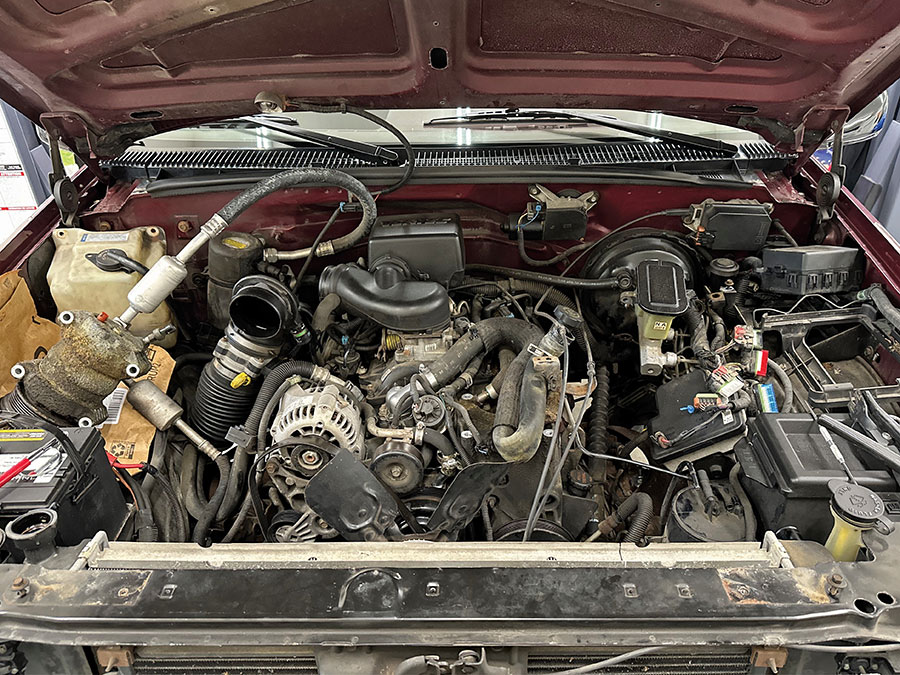
3. From the factory, the truck was equipped with the L31 Vortec 5.7 V-8, five-speed manual transmission and a 3.42:1 rear gear. Other than being lowered and the addition of 20-inch wheels, the truck was stock.
Interior view of the Cheyenne trim level Chevrolet pickup.
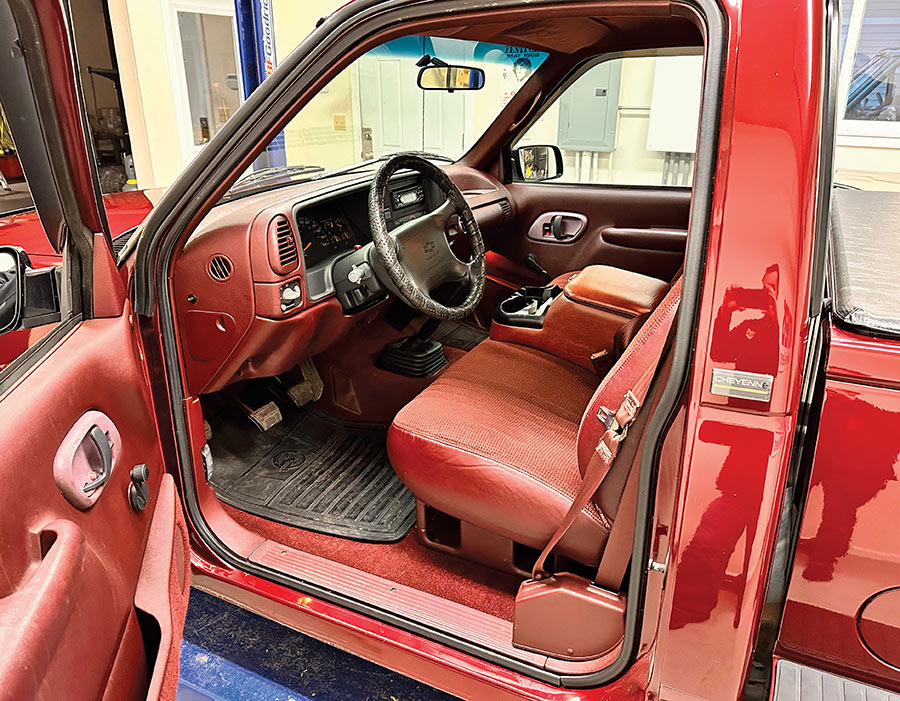
4. This truck was unusual in that it came from the factory with upgraded running gear but the cab lacked the typical options. Although it did come with air conditioning, the door locks and window regulators are manually operated.
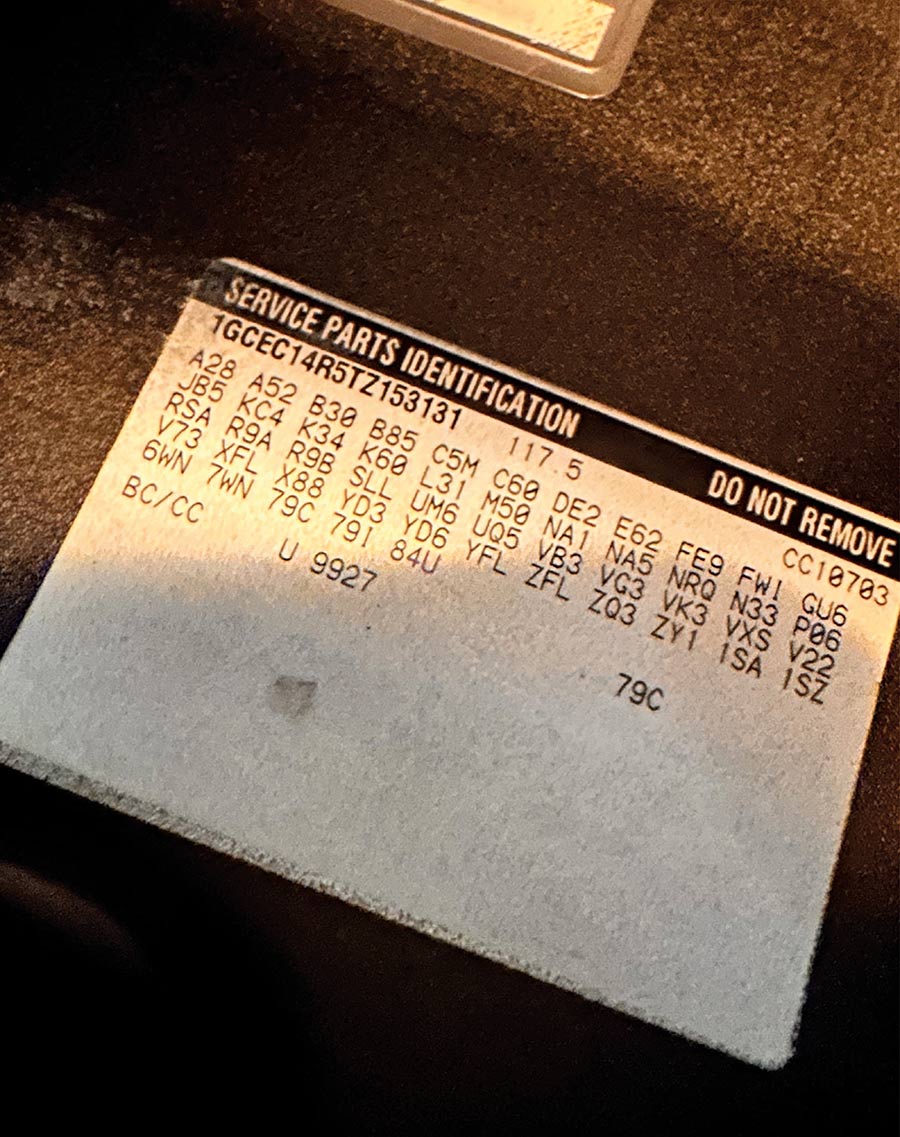
Service Parts Identification label found in the glovebox.
5. Found in the glovebox of these trucks is a “Service Parts Identification” list that shows the options included during production. A few examples from this truck: A28-sliding rear window, A52-front bench seat, B85-bright body side moldings, and C5M-gvw rating, 6,100 pounds.
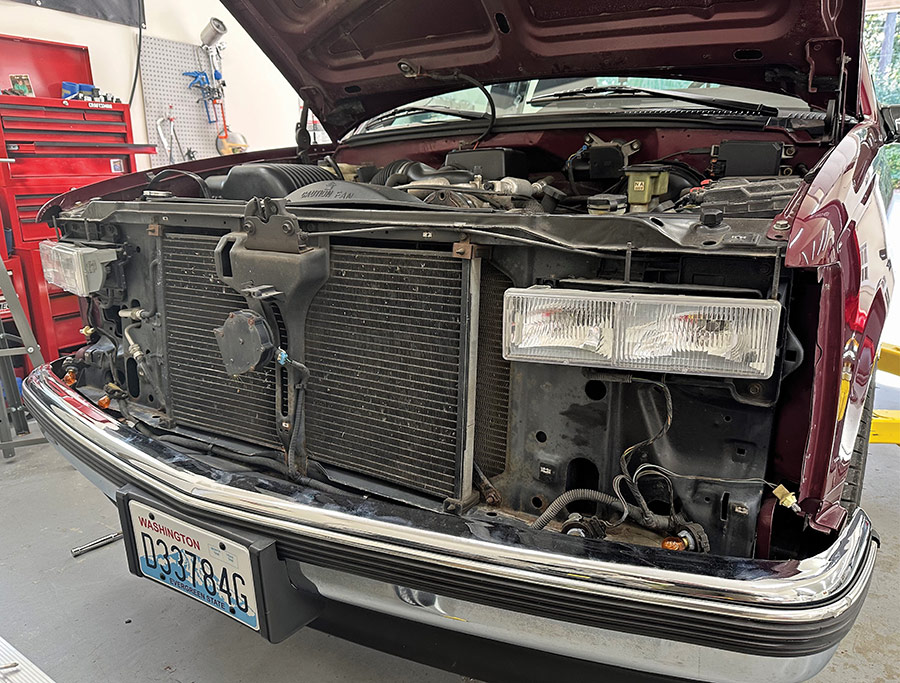
Front clip of the Chevrolet OBS after disconnecting connectors.
6. With all the electrical connectors unplugged and all the plumbing disconnected, the body with the front clip attached was lifted off the frame.
Disassembled truck cab mounted on a yellow metal cart.
7. While it is possible to leave the front sheetmetal intact, Jones ultimately chose to disassemble it all so the individual parts could be painted or powdercoated.
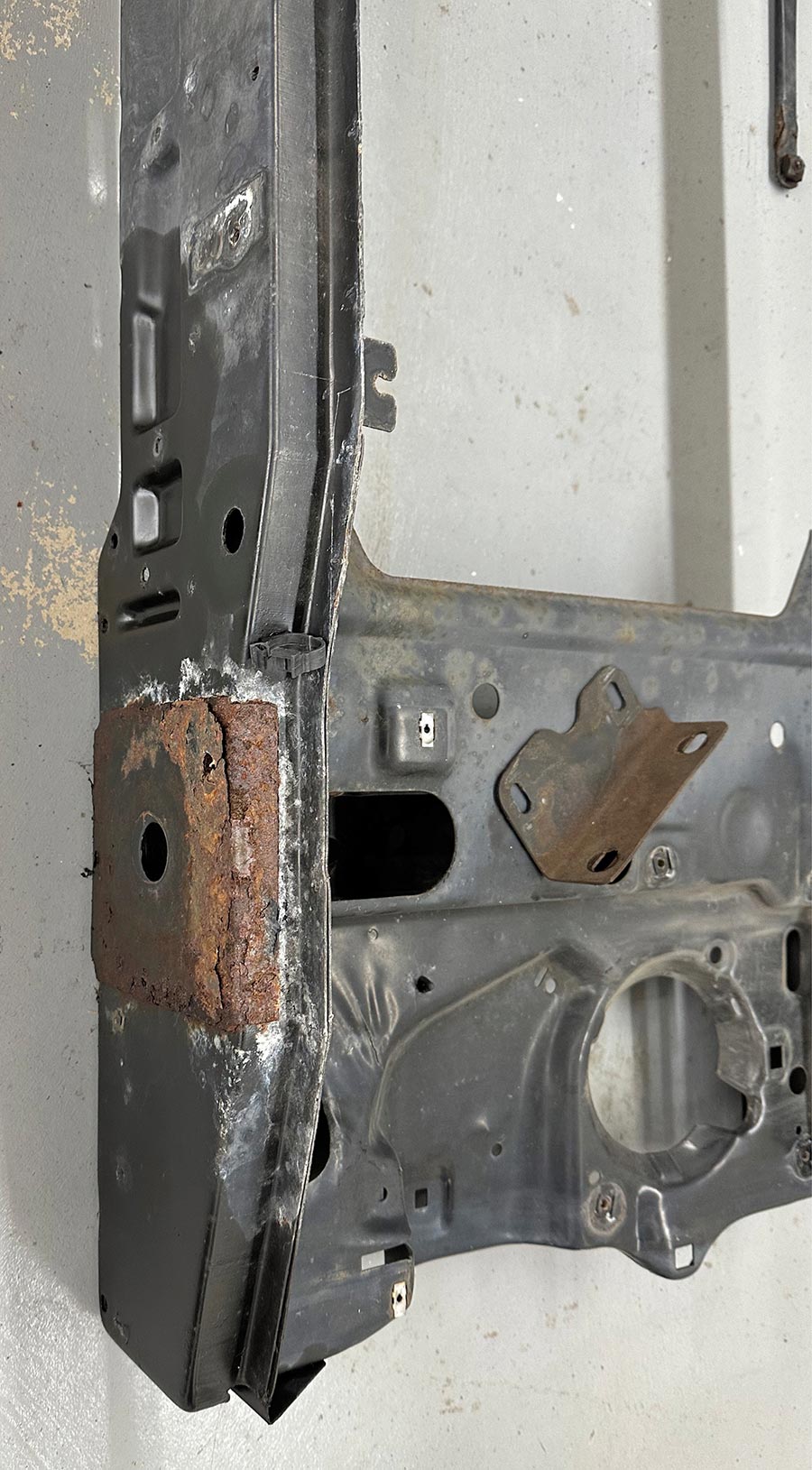
Rusted frame mount area on a core support.
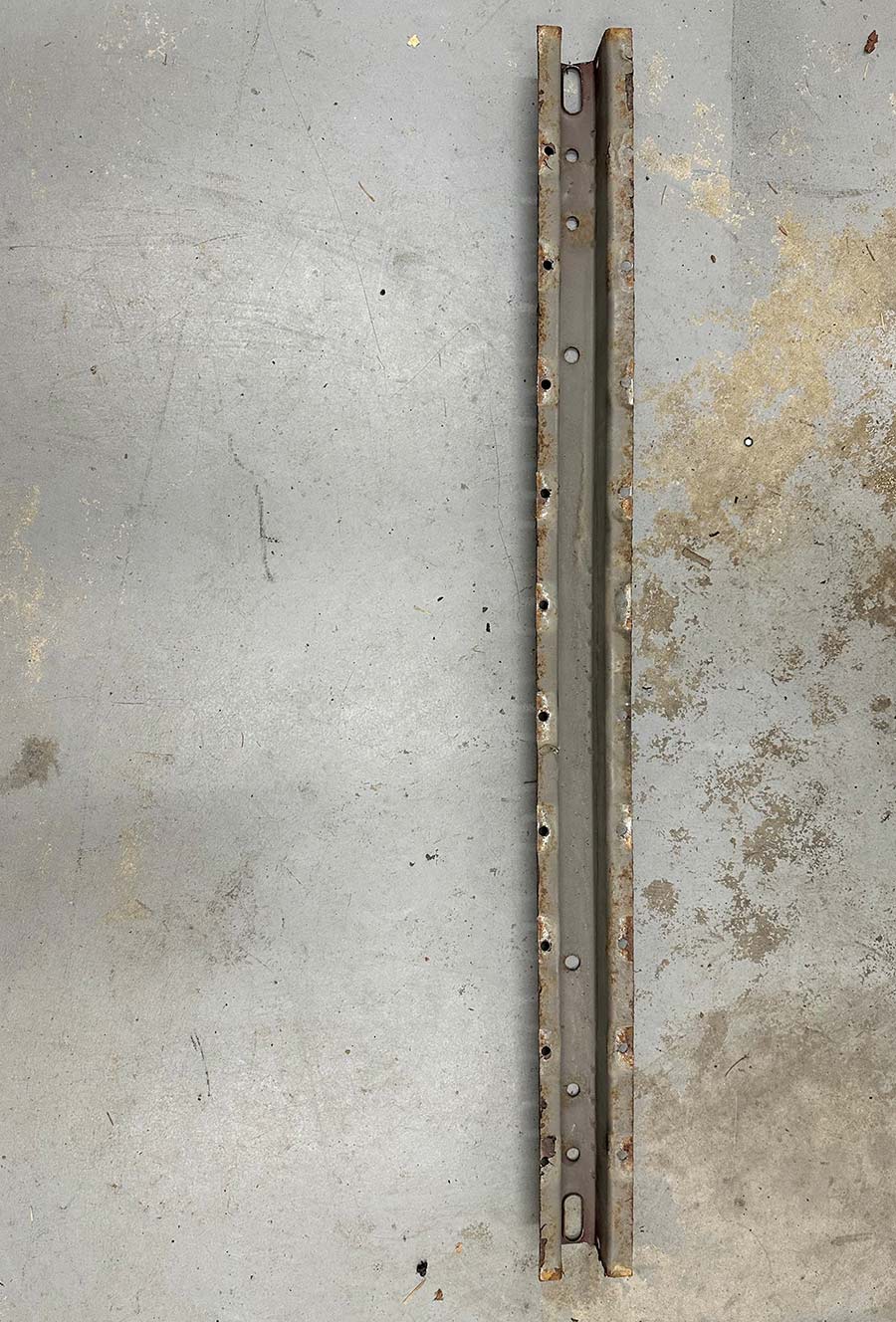
8. One area that often needs attention is the core support where it bolts to the frame—note the rust around the hole for the mount. If the core support can’t be saved replacements are available.
AME chassis fabrication on a dedicated vehicle fixture.
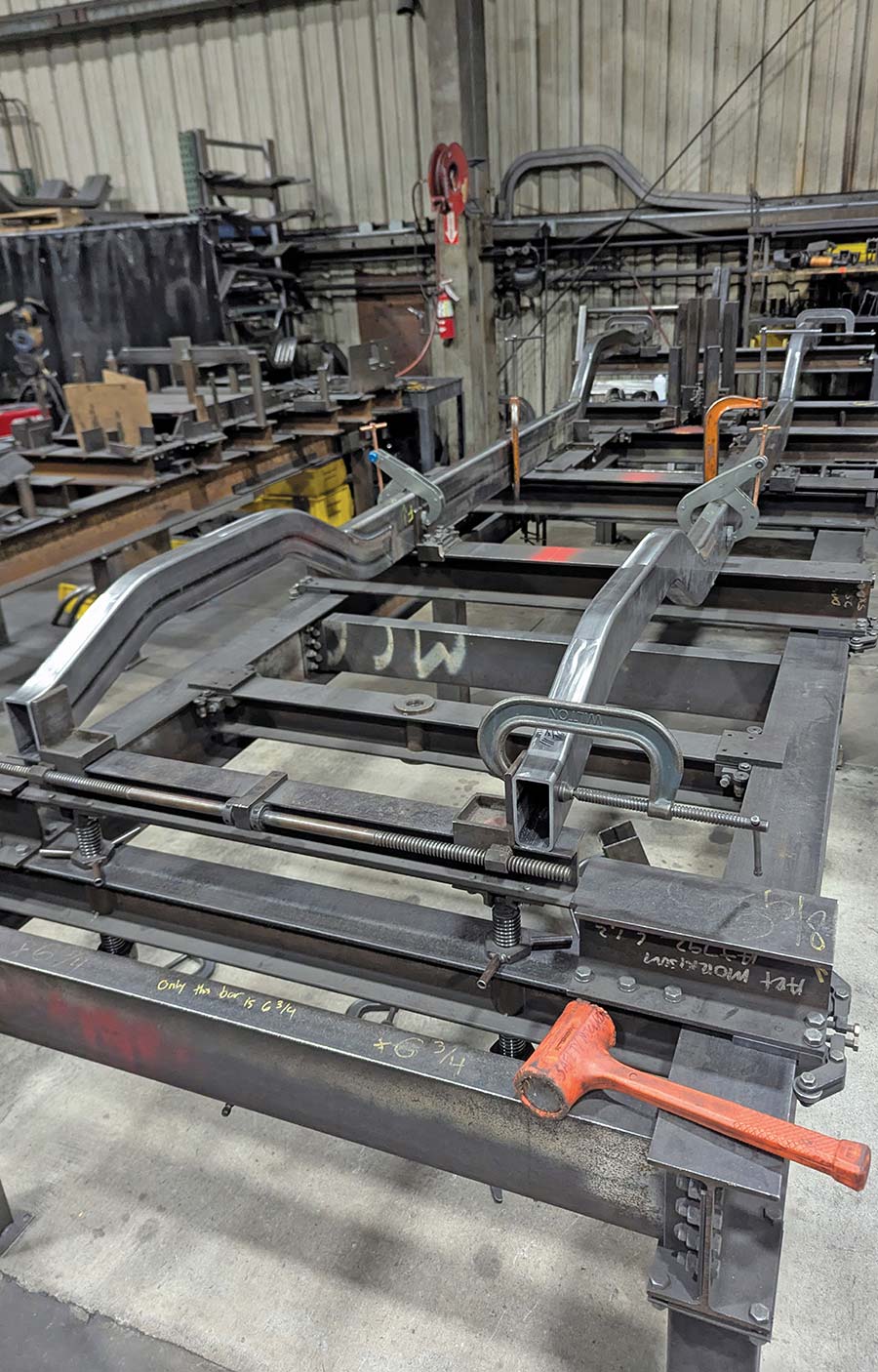
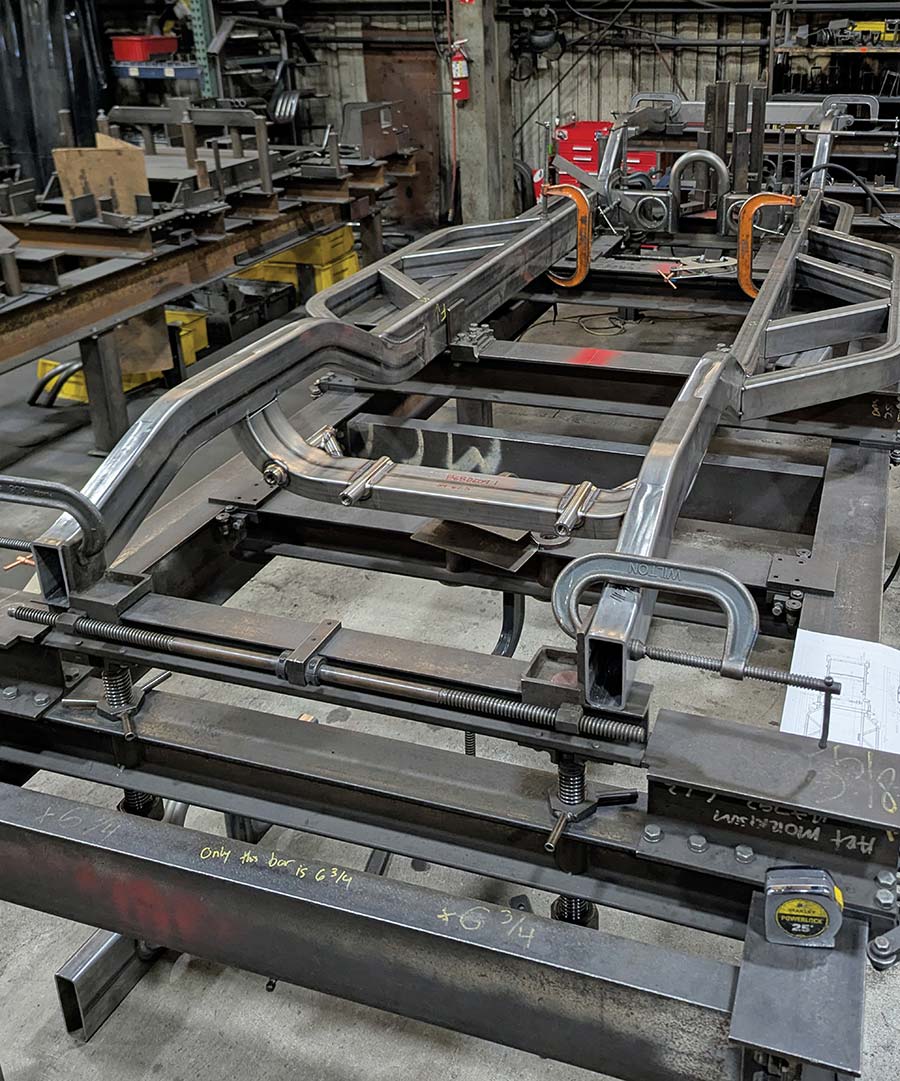
9. All AME chassis fabrication is done on a dedicated fixture for a specific vehicle. OEM frames are 3-D scanned with computer-generated designs that precisely locate every mount, bracket, and component.
Mandatory bent steel tubing of the AME OBS chassis
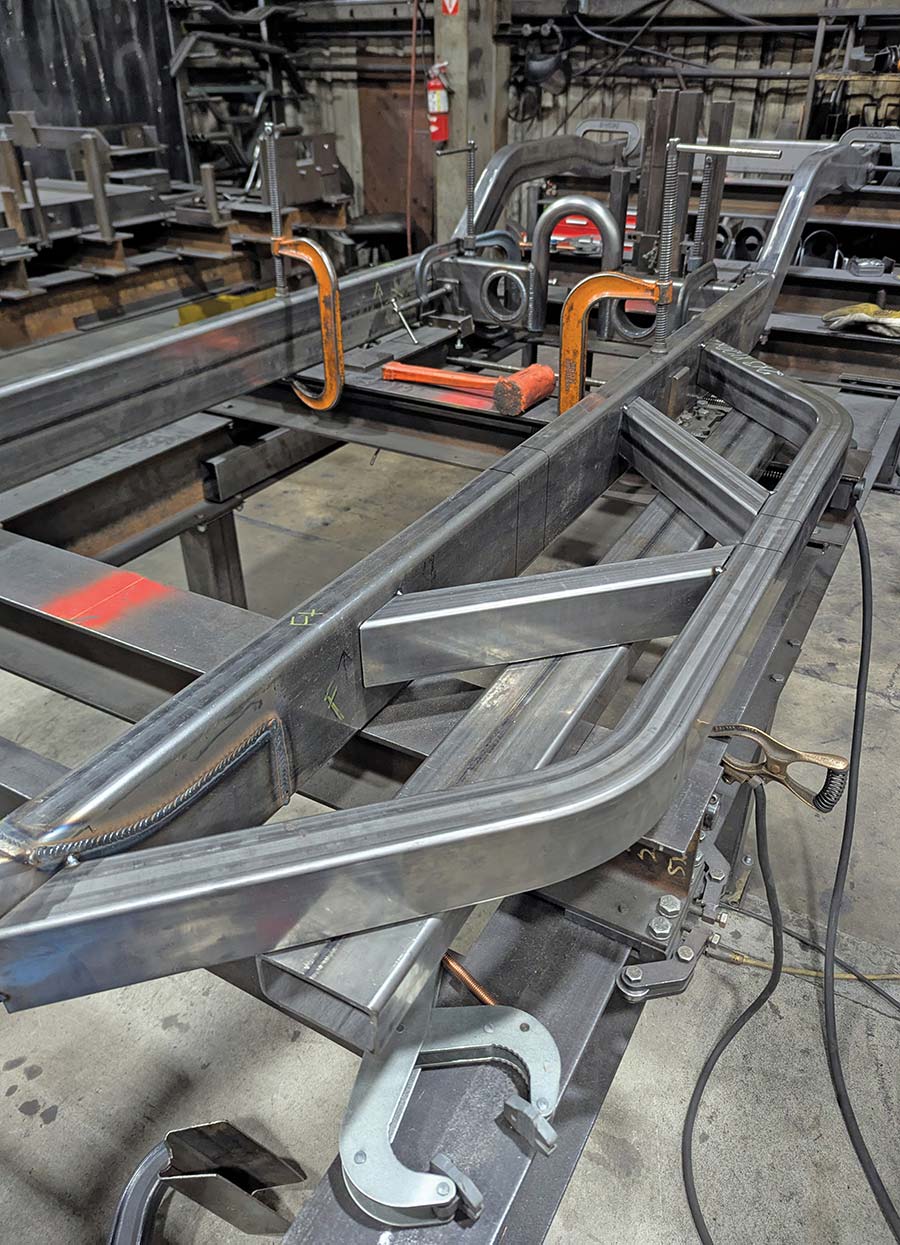
10. The AME OBS chassis is made from 0.180-inch wall, mandrel-bent steel tubing. The framerails measure 2×4 inches in the front/rear/middle, and 2×6 main rails down the center.
Rigid replacement AME chassis providing a solid foundation.
11. Far more rigid than the stock C-channel frame, the AME chassis provides a solid foundation that allows the suspension to work as it should while also reducing the body flex that produces squeaks and rattles.
Installing an original style body mount on AME chassis.
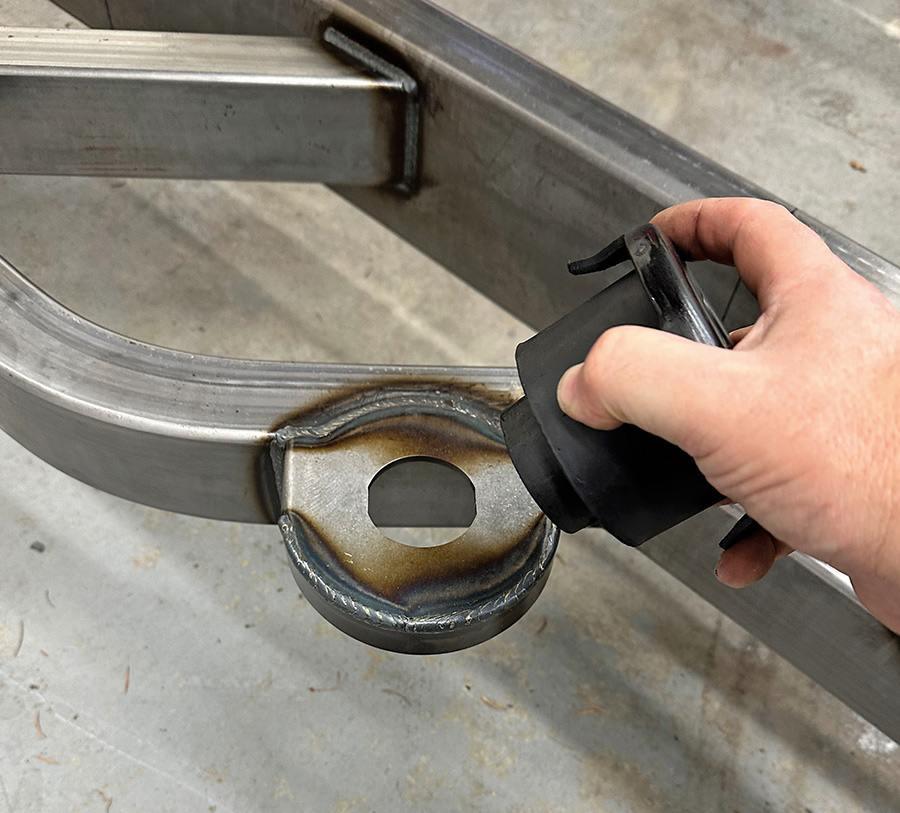
12. AME’s chassis is a direct bolt-in swap for the original. It uses all the original-style body mounts and bed mounts with only a simple modification to the bed floor required.
Overhead view of the AME replacement chassis.
13. For strength the new chassis is bridged at the front bed mount with a rectangular tube crossmember. It is connected to the rear framerails with round tubing to maximize stiffness in this area.
Plumb bob hanging from cab mounting bolt for alignment.
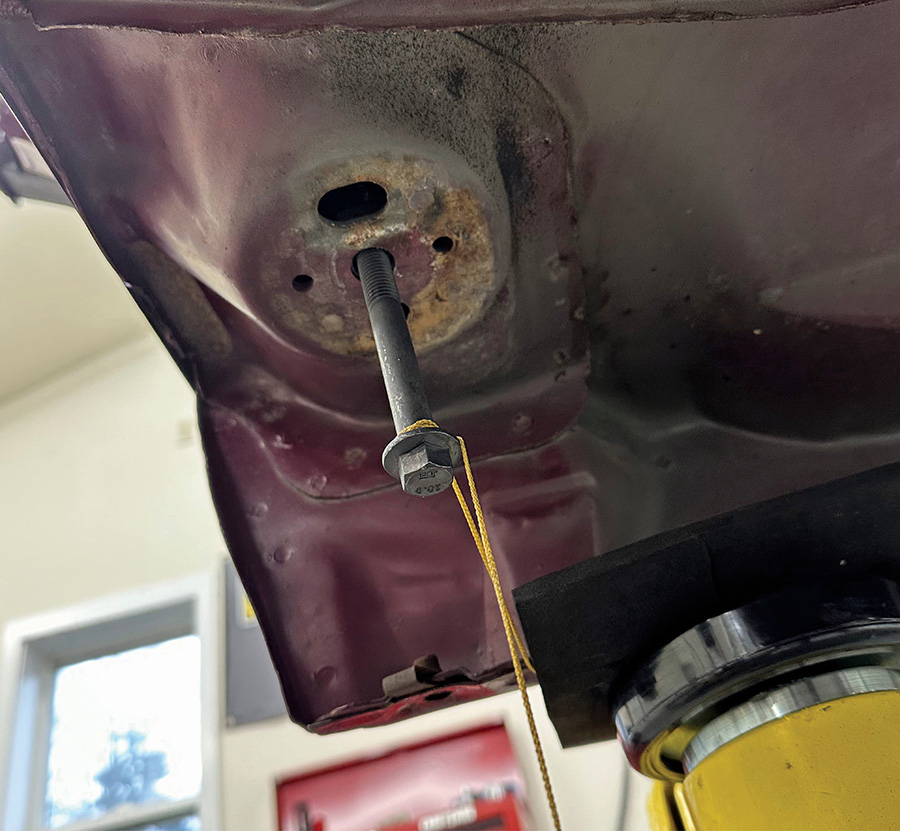
14. From the factory the cab is mounted to the frame at four points. A clever trick was to use plumb bobs hanging from mounting bolts to align the body with the frame during reassembly.
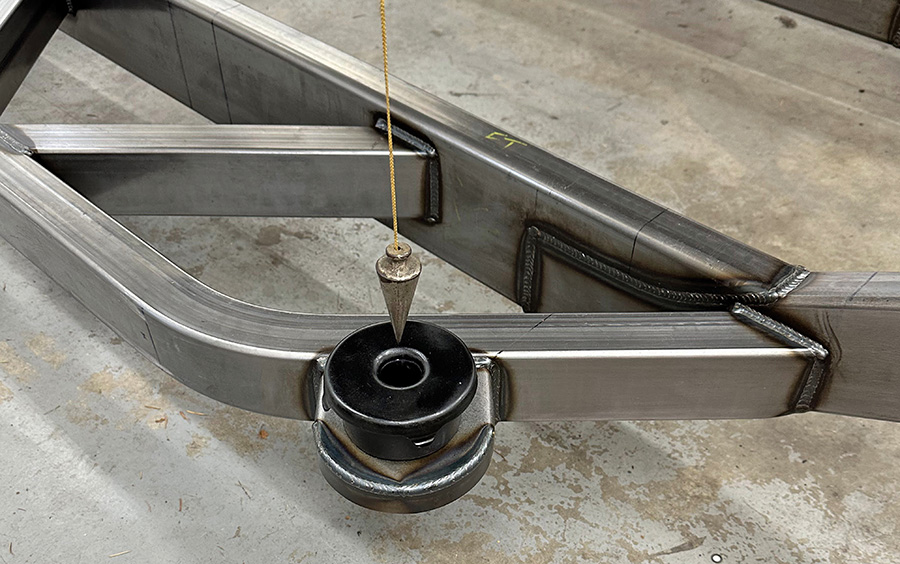
Plumb bob verifying proper alignment of chassis mounts.
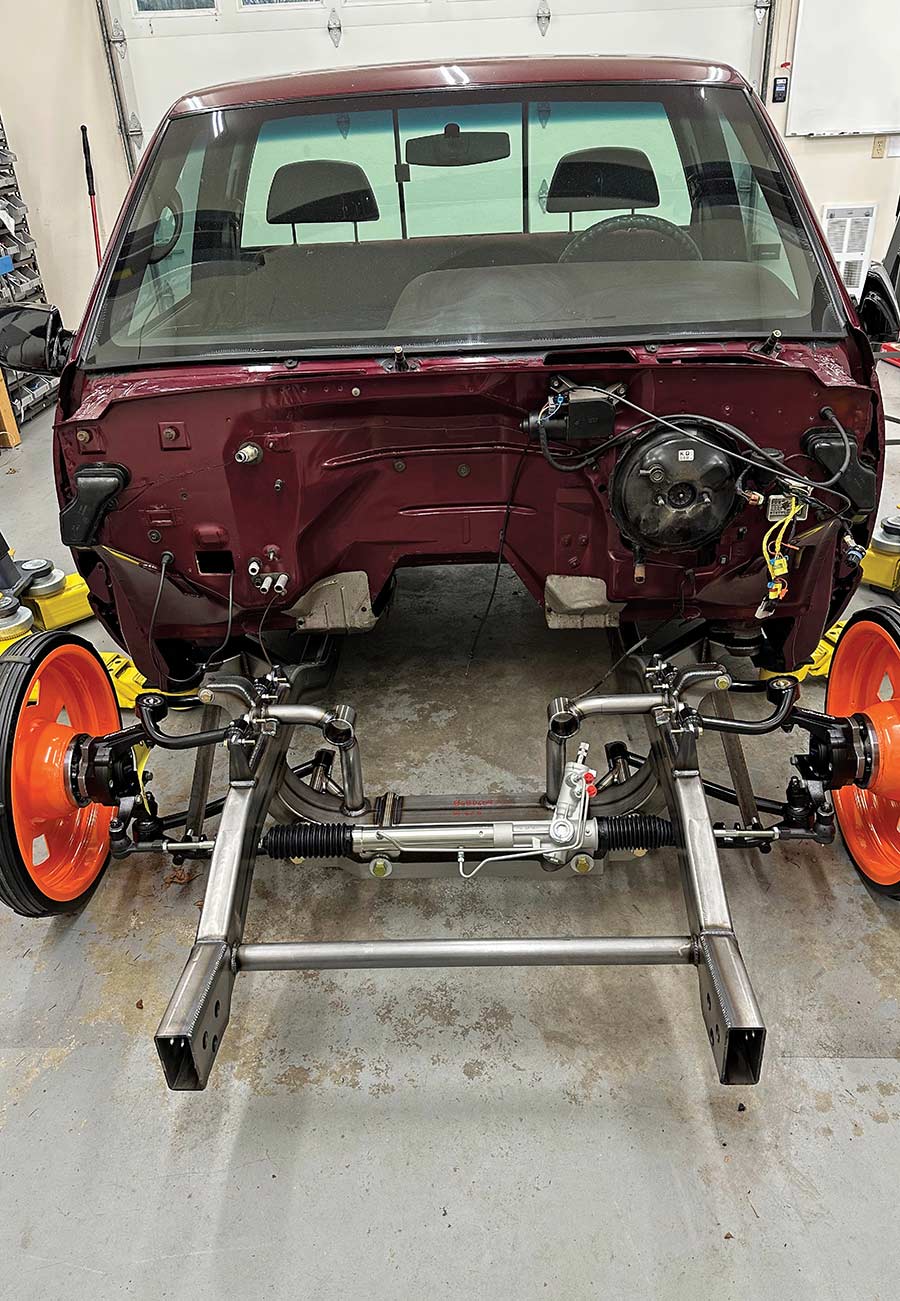
15. With chassis positioned under the body, the proper alignment of all four mounts was verified and the cab was lowered onto the frame.
Cab lowered onto the new AME performance chassis.
16. AME offers a variety of coilovers and a choice of Wilwood pin-style or modular hub spindles (shown here). Tubular control arms and power rack-and-pinion steering are standard.
Rear 9-inch axle housing with Watts link and coilovers.
17. Like the front, there are a number of rear coilover options available. The new 9-inch axle housing is located by parallel four-bars and a Watts link.
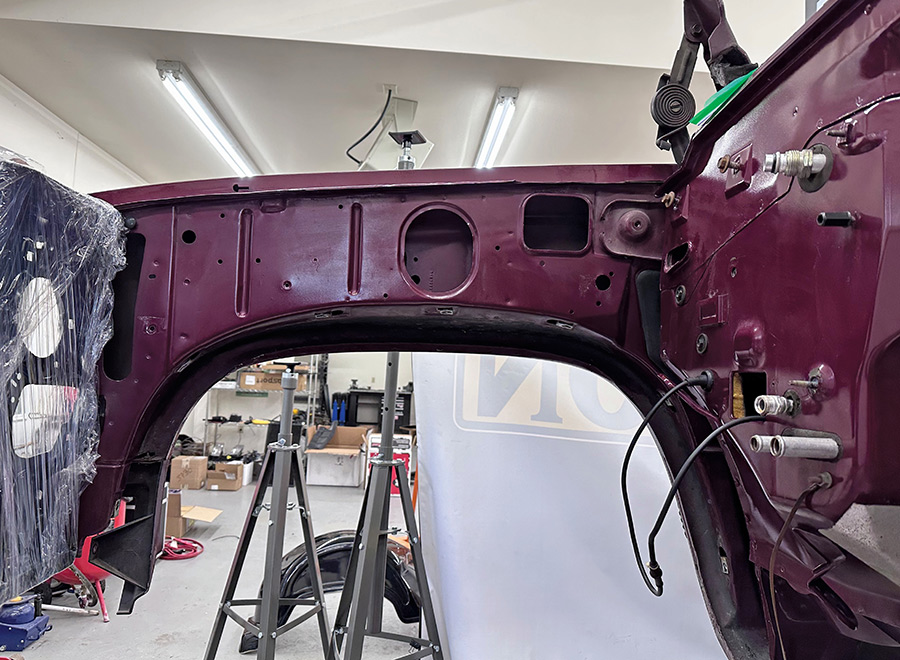
Original stock inner fender before cutting for clearance.
18. The Sport IFS offers a total of 6 inches of suspension travel (compression and extension). While not normally necessary, it was decided to modify the inner front fender panels to accommodate the full range of suspension travel with the size wheels and tires that will be used.
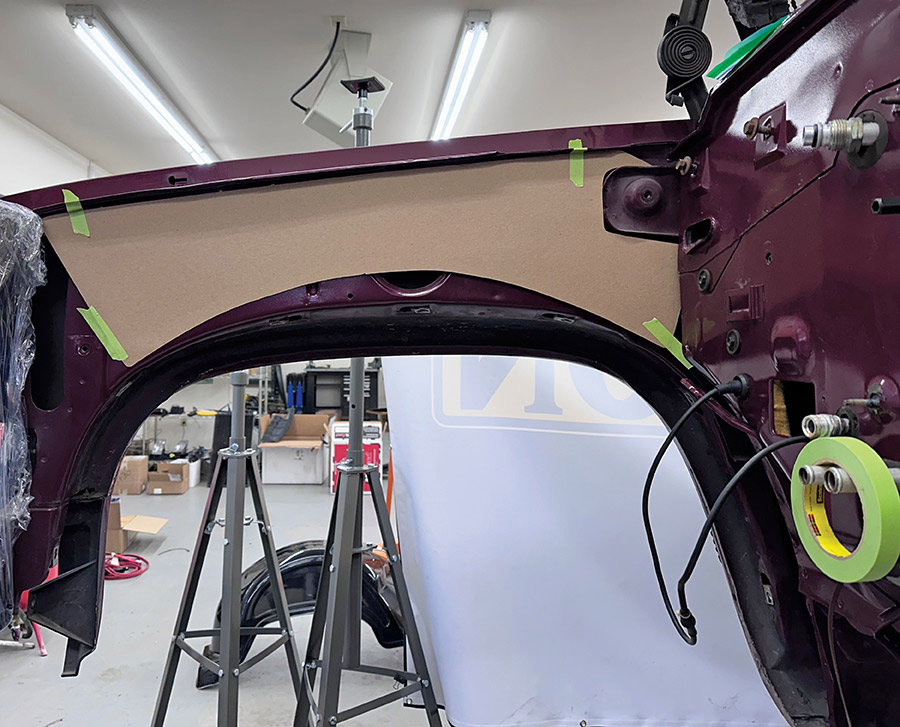
Cardboard template marking the inner fender for modification.
19. Here a cardboard template was used to mark the area that will be cut away.
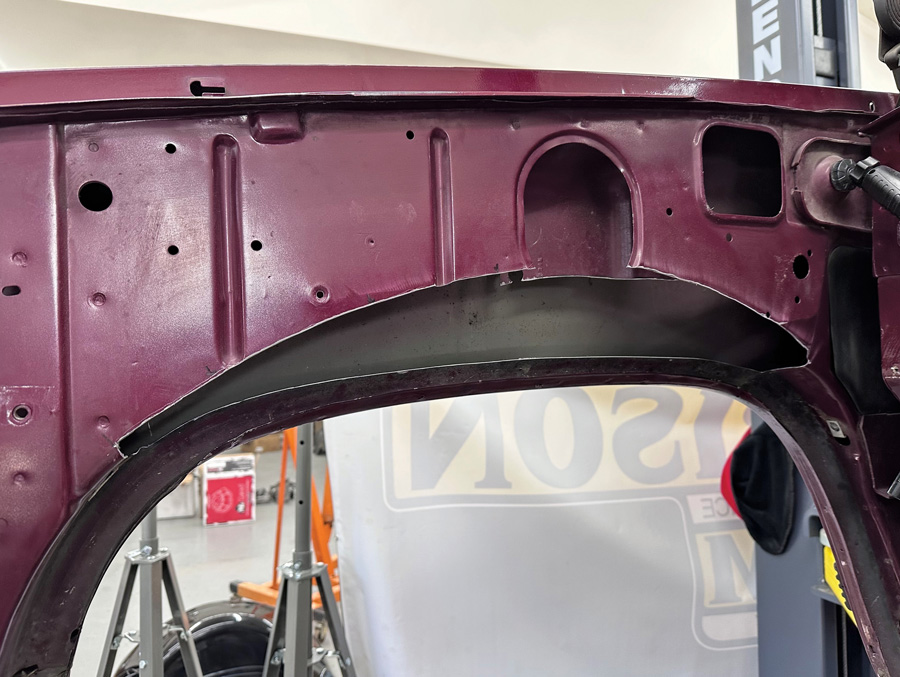
Vertical and horizontal cuts made to stock inner fenders.
20. Both vertical and horizontal cuts were made to the stock inner fenders, leaving a flange on the fender opening.
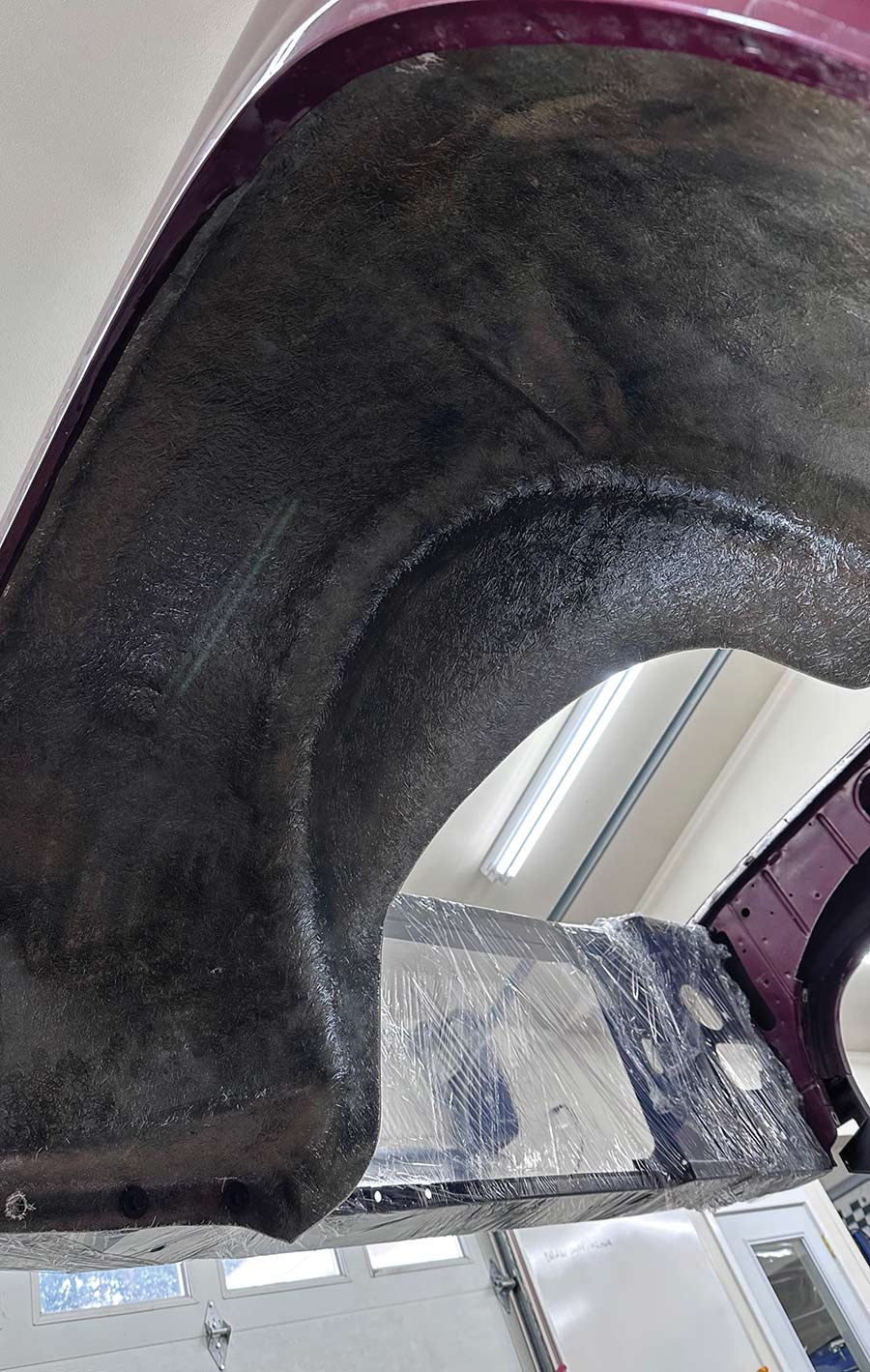
New Slosh Tubz fiberglass inner fender panel installed.
21. The new fiberglass inner fender panels are from Slosh Tubz (sloshtubz.net). Compared to the stock inner fenders they are approximately 3 inches taller, 2 inches wider toward the outside edge of the fender, 2 to 3 inches wider toward the engine.
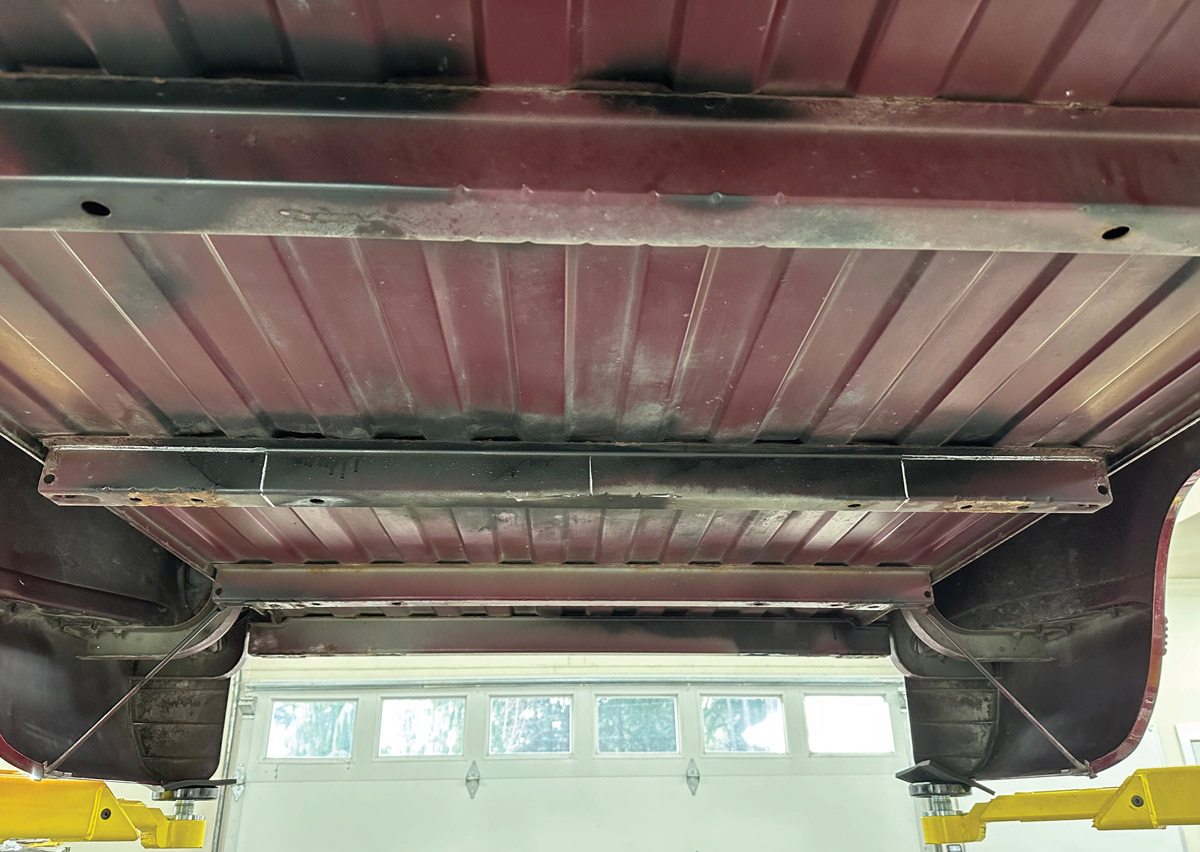
Removing the third bed support for framerail clearance.
22. To get the most suspension travel with the lowest ride height the framerails fit tight to the bed floor, which requires removal of the third bed support.
The removed factory bed support after drilling spot welds.
23. Removing the bed support is easily done by drilling the spot welds. No other modifications to the cab or bed are required.
Hardware fasteners organized and labeled in plastic bags.
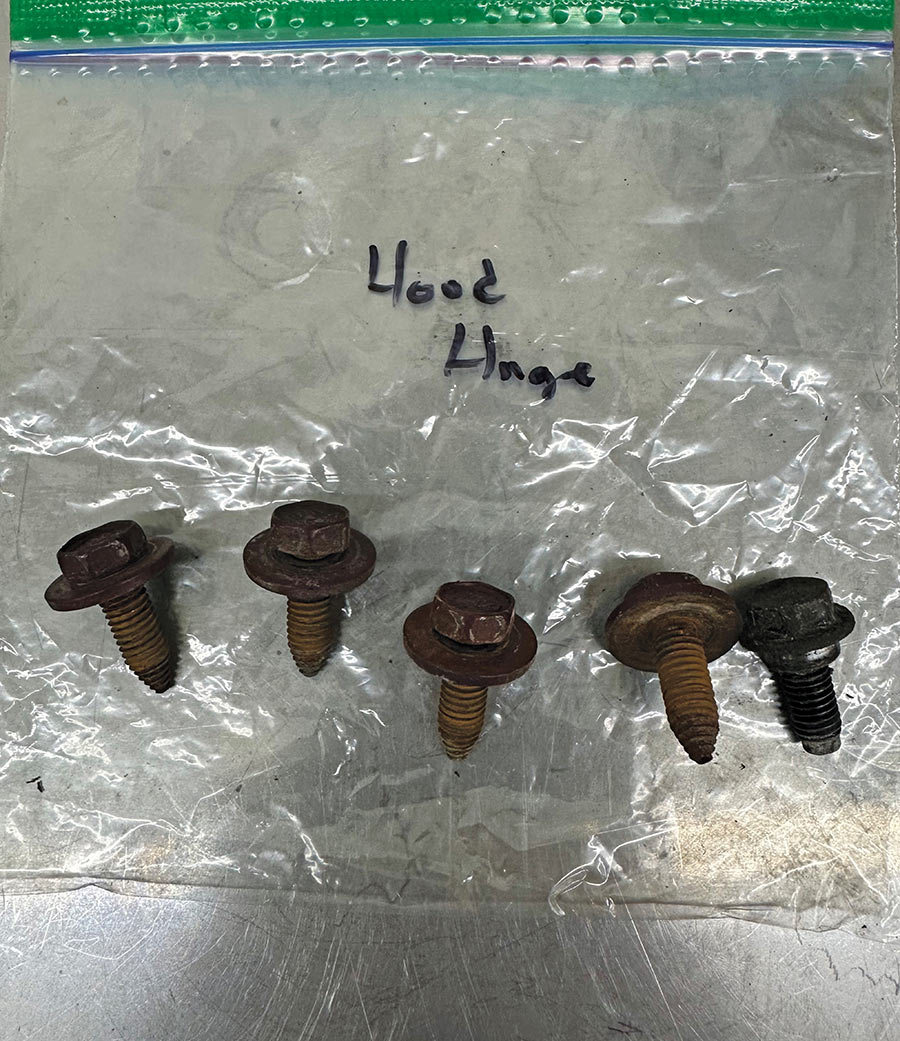
24. Taking a truck apart means there are lots of nuts and bolts to deal with. Jones was organized enough to label bags for various fasteners and their locations.
In The Garage Media
Art Morrison Logo

(253) 922-7188
artmorrison.com