

 Feature
 Images by NotStock Photography
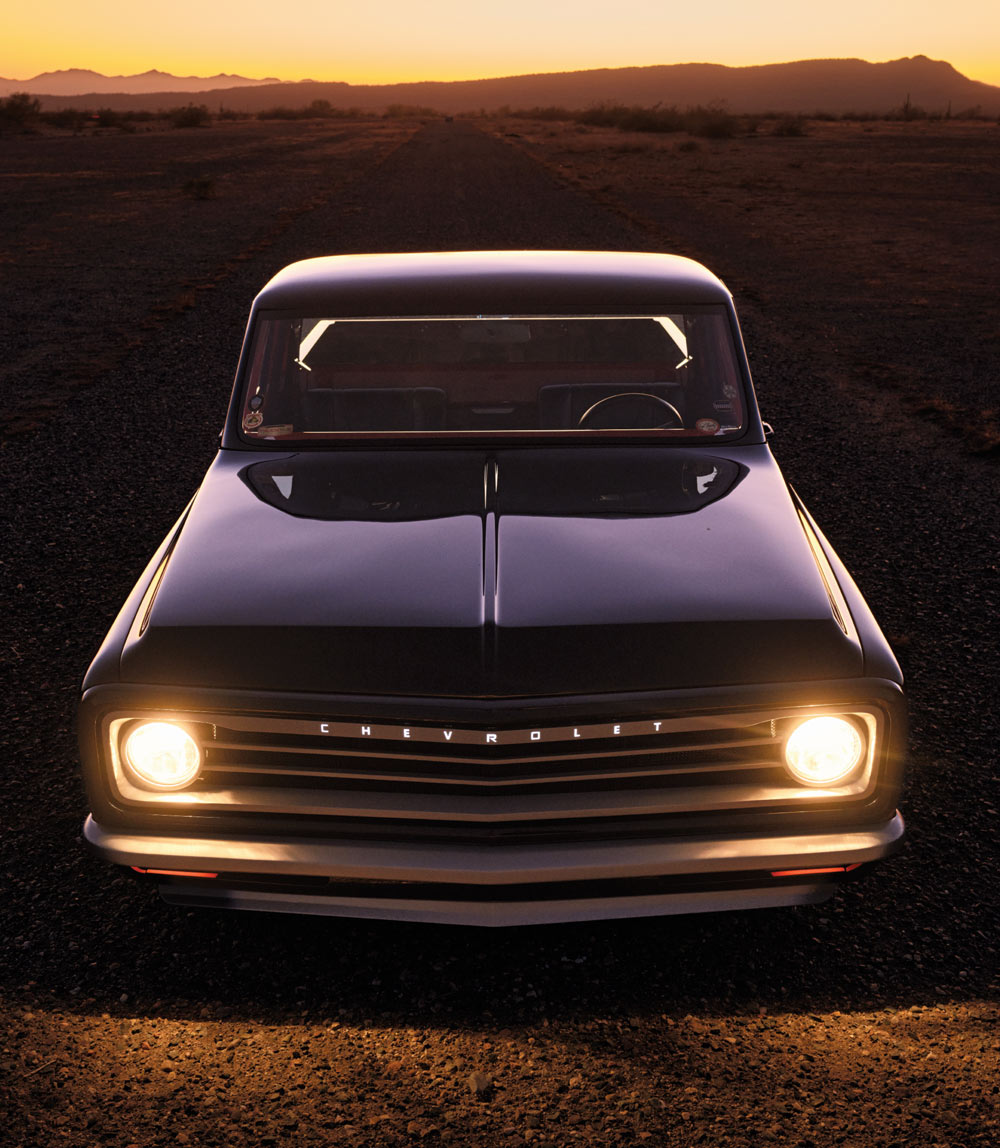
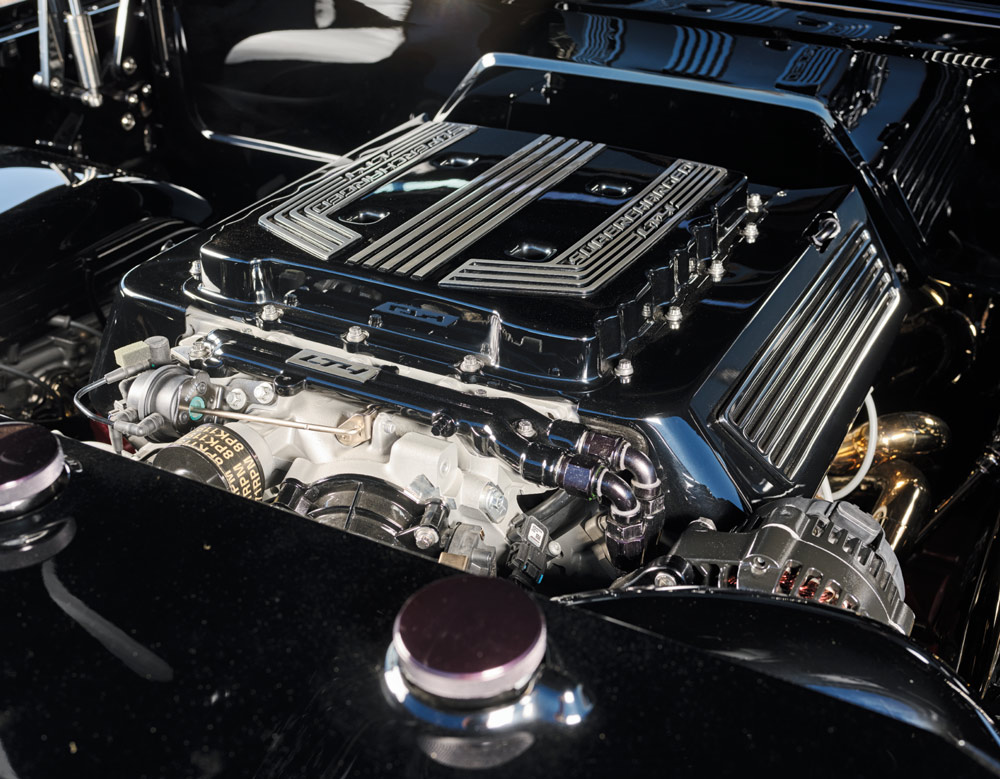
hen it comes to stealth hot rods (subtle yet menacing), to me, nothing is more iconic than a black-on-black (with red accent) ’60s-70s Chevy muscle car with the proper stance, and, of course, some mean motivation underhood. Typically, that describes many a Chevelle, Camaro, and even Nova. But in this case, it only begins to describe Mark Deatley’s 1972 Chevrolet C10, built by none other than Hot Rods by Dean (Livermore).
“When I asked Dean Livermore about the sheetmetal changes made to this 1972 Chevy C10, he chuckled and replied, ‘What wasn’t changed?’ The modifications start at the front with significant reconfigurations to the cowl and firewall. Everything from the dashboard forward has been custom made to ensure the cowl fits snugly at the back of the hood, allowing it to close properly while clearing the doors and fenders. The side markers have been filled and the entire grille area, including surrounds, is custom built with backlit Chevrolet emblems crafted from acrylic framed-in steel. Additionally, all turn signal indicators and buckets are 3-D-printed. The fender openings have undergone extensive alterations, as well. The top of the front wheel openings was lowered by 1/2 inch, while the front and rear edges were pulled closer together by 3 inches and dropped approximately 2 inches. This creates a more-aggressive look compared to the stock openings. The top of the cab was chopped by 3 inches, and the center crown was reduced by 2 inches, resulting in a flatter roof profile.

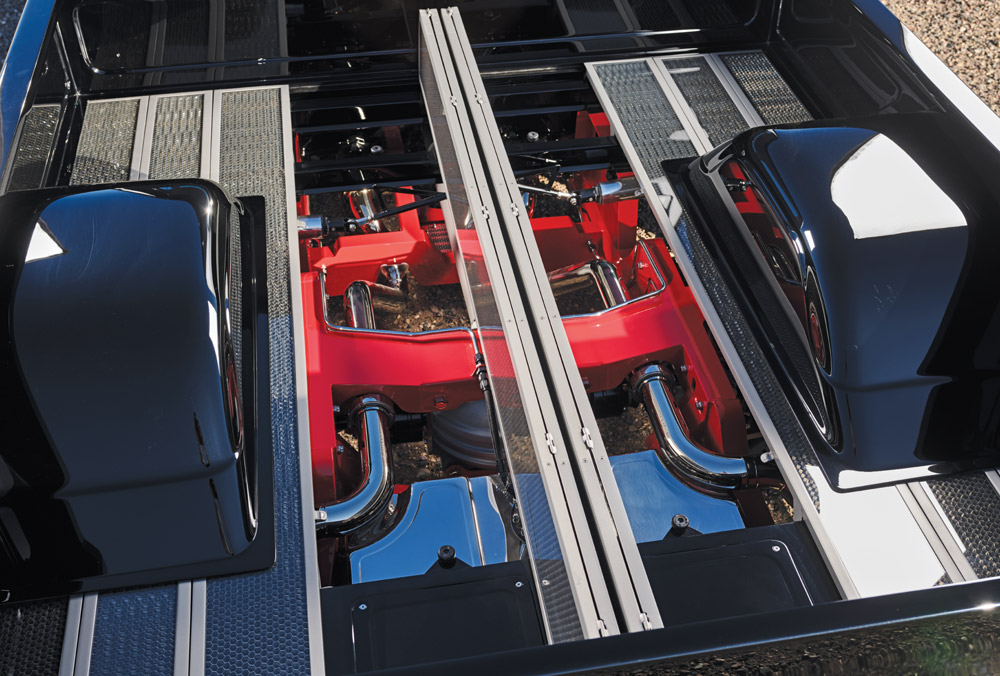
One standout feature of the bed is its accordion-style floor, which opens up to reveal the suspension, underbody, and chassis components. These trifold panels are constructed from stainless steel framing with an aircraft-grade honeycomb core, finished with acrylic glass for enhanced visibility.

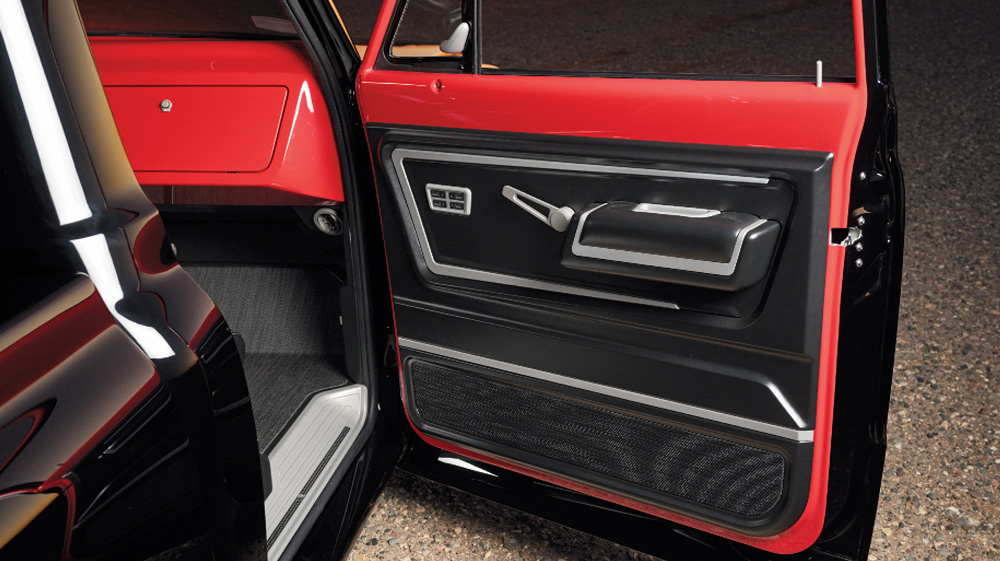
“Stitchwurx contributed by utilizing 3-D printing for all internal panels. These panels, routed out of a single block, are secured without screws—using magnets instead. The seating resembles a bench yet functions as individual bucket seats, featuring a center armrest that converts into a console. The interior (including the armrest/console) is finished in red leather with black and gray accents. An Ididit steering column is paired with a SPARC steering wheel featuring a flat bottom for added leg clearance. Above the wheel, the driver gazes at a full set of Classic Instruments AutoCross Series gauges, providing essential information.”



The effort to make Mark’s C10 unique is staggering, totaling nearly 9,000 hours for the build. Within those hours, there are 800 hours allocated for painting, cutting, and buffing (no bodywork is accounted for); a year spent sourcing parts; and an additional 3-1/2 years to complete the project. This Chevy pickup is a testament to a Herculean effort.